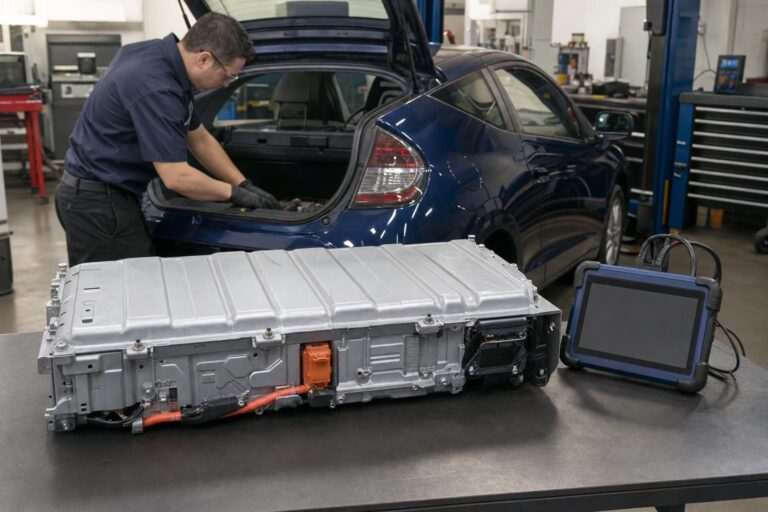
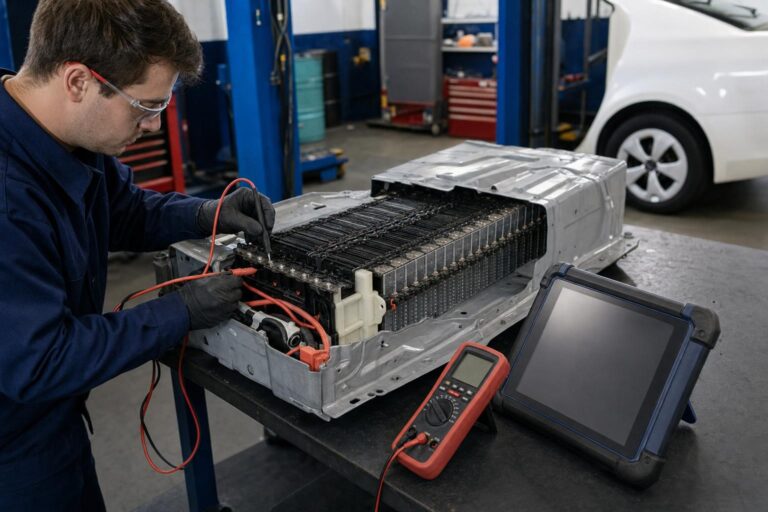
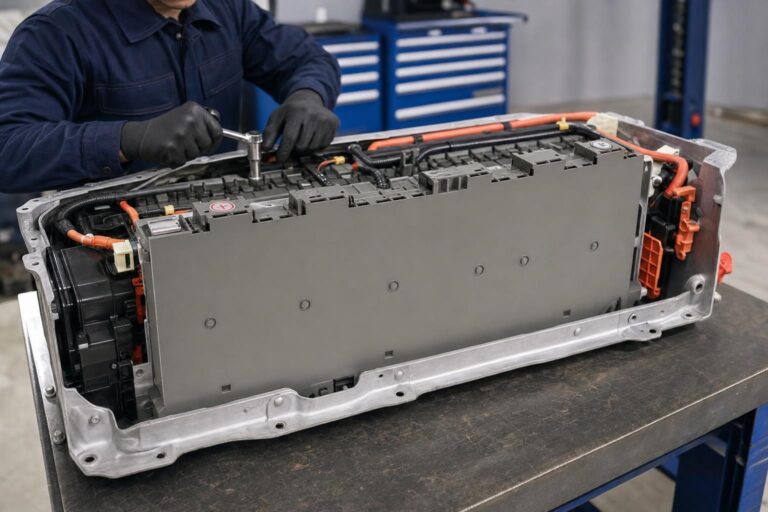
信頼できるハイブリッドバッテリーソリューション































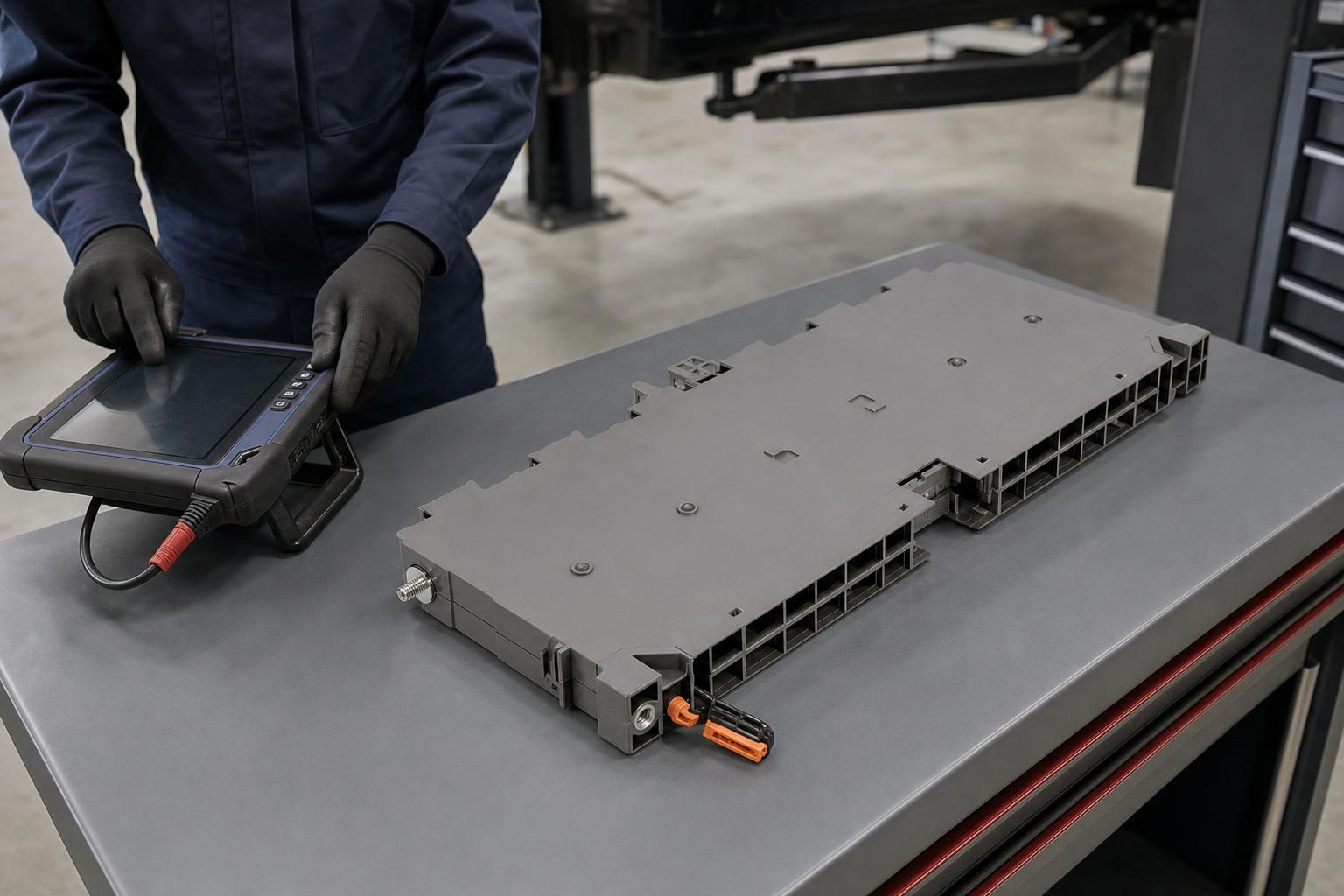
Toyota Crown Hybrid Battery Replacement: Which Pack Fits Which Crown, and What It Really Costs
A practical guide for repair shops, importers and fleets on identifying, diagnosing, costing and sourcing a Toyota Crown hybrid battery replacement across the older exported Crown sedan and the newer global Crown and Crown Signia platforms.

“Toyota Crown hybrid battery replacement” is not one job with one part number. It covers at least two very different vehicles: the long-running JDM and export Crown sedan (such as the 200-series, model code GWS204, re-exported widely to New Zealand, the UK, Ireland, the Caribbean, Africa and the Pacific) and the newer global Crown and Crown Signia generation launched for the 2023 model year onward. Before any buyer quotes a price or orders a pack, the first task is to confirm which Crown is on the lift, which engine variant it carries, and what high-voltage battery that variant actually uses. Getting this wrong is the single most expensive mistake in Crown hybrid sourcing.
This guide helps repair shops, used-import dealers, fleet operators and parts resellers outside China identify the correct pack, rule out faults that mimic battery failure, read realistic cost benchmarks, and build a sourcing checklist for a brand-new OEM-spec replacement rather than a used or reconditioned pack.
主なポイント
- The Crown name spans two unrelated platforms: the older exported Crown sedan (e.g. GWS204) and the 2023+ global Crown and Crown Signia generation — confirm the platform before sourcing.
- On the current Crown, the high-voltage pack is engine-specific: the 2.5L Hybrid uses a different battery from the 2.4L “Hybrid MAX” turbo. VIN-level verification is essential.
- US-market dealer-level replacement on the current Crown platform runs into five figures — around $14,875–$15,082 per RepairPal — making a credible new-pack supply chain commercially important.
- Always diagnose inverter, DC-DC converter, voltage-sensor and wiring faults before condemning the battery; several of these mimic pack failure.
- For resale and fleet duty, a brand-new OEM-spec NiMH pack reduces comeback risk compared with used or reconditioned packs of unknown history.
Two Crown platforms, two sourcing problems
The confusion starts with branding. Toyota has used the Crown name for decades, and the cars sold under it today share almost nothing with the sedans that still arrive in used-import markets.
The older exported Crown sedan (e.g. 200-series, GWS204)
These are the right-hand-drive hybrid sedans that flow into secondary markets as used imports. According to generation-level documentation they use a nickel-metal-hydride (NiMH) high-voltage pack, and many are now 8–15 years old — squarely in the window where cell imbalance and capacity loss become common; even so, confirm chemistry and configuration against the VIN and the pack label before ordering. For Japan-market 200-series Crown Hybrid cars, reported drive-battery replacement figures span roughly ¥350,000–¥500,000 for a new pack, ¥220,000–¥300,000 rebuilt, and ¥100,000–¥200,000 used, inclusive of diagnosis and labour. That spread tells you most of the price difference lives in the part and its provenance, not the labour.
The newer global Crown and Crown Signia (2023+)
These are the current-generation vehicles sold in the US and other Western markets. Here the high-voltage battery is tied to the powertrain variant. A buyer’s guide for the 2023–2026 Crown and Crown Signia notes the pack it covers fits only the 2.5L hybrid engine and not the 2.4L “Hybrid MAX”, quotes new OEM pricing of roughly $8,100–$8,400 plus a $1,350 core charge, and warns that new aftermarket packs for this specific model are not yet widely available. That scarcity is the defining sourcing challenge on the current platform.
Battery chemistry and configuration: why the VIN decides everything
Do not assume chemistry from the badge. On the current Crown lineup, the 2.5L Hybrid and the 2.4L Hybrid MAX use different high-voltage packs with different voltage, physical form and mounting. A pack that electrically and mechanically suits one variant will not simply drop into the other.
The only reliable identification path is the vehicle identification number combined with the battery’s own markings. Before ordering, record:
- Full 17-digit VIN and the decoded engine/trim code.
- Powertrain variant — base hybrid versus Hybrid MAX on the current platform, or the specific generation code (e.g. GWS204) on older exported sedans.
- Existing pack label — nominal voltage, module count and part number photographed directly from the removed or in-situ battery.
- Connector and harness layout, service-plug type and cooling-duct geometry.
If you resell across several Crown generations, treat each generation and each powertrain variant as a separate SKU. OKACC lists Crown-platform hybrid batteries under its クラウン hybrid battery category so buyers can confirm fitment by VIN and pack label before ordering, rather than guessing by year alone.
Warning signs of a failing Crown hybrid battery
A genuine hybrid-battery fault usually shows a cluster of symptoms rather than a single one. Watch for:
- Sharp drop in fuel economy as the engine runs more often to compensate for a weak pack.
- “Check Hybrid System” or master warning lights, often alongside stored hybrid-battery fault codes.
- State-of-charge gauge swinging rapidly between full and low, or refusing to hold a middle charge — a classic sign of cell imbalance.
- Reduced electric assist, sluggish acceleration, or the petrol engine staying on almost constantly.
- Cooling-fan noise or a thermal warning, which can point to a blocked battery cooling intake rather than cell failure.
These signals justify a diagnostic, not an automatic pack order. Several unrelated faults produce near-identical dashboard behaviour.
Diagnose before you replace
The high-voltage battery is one node in a system. A proper diagnosis protects both your margin and your reputation, because a replaced pack that does not fix the fault becomes a costly comeback. Before condemning a Crown battery, confirm you have ruled out:
- Inverter / converter assembly faults that can throw hybrid-system codes resembling battery failure.
- DC-DC converter problems affecting the 12V system and triggering cascading warnings.
- Battery voltage or current sensor faults that report false imbalance.
- Wiring, service-plug and connector corrosion, especially on older exported sedans that have lived in humid or coastal climates.
- Blocked cooling path causing heat-related derating that mimics ageing cells.
Capture block-level voltage data and freeze-frame codes with a hybrid-capable scan tool. Only once sensors, cooling and converters are cleared should the pack itself be judged. High-voltage work on these vehicles is dangerous — the current Crown pack operates over 230 volts — and should only be performed by technicians trained and equipped for high-voltage service.
What replacement actually costs
Cost depends almost entirely on platform and on which supply route you choose. The table below summarises published benchmarks; treat them as directional only, since currency, region and labour rates vary. Note that the Crown and Crown Signia figures are US-market dealer estimates in US dollars, while the 200-series figures are Japan-market totals in yen — convert and adjust for your own market before quoting.
| Vehicle / route | Reported cost band | ソース |
|---|---|---|
| Current Crown Hybrid, US market (dealer HV battery replacement) | $14,875–$15,082 total (parts ~$14,430; labour $444–$652) | RepairPal |
| Crown Signia Hybrid, US market (dealer HV battery replacement) | $14,870–$15,075 total (parts ~$14,430; labour $439–$644) | RepairPal |
| Current Crown / Signia 2.5L, US market (new OEM part only) | ~$8,100–$8,400 + $1,350 core charge | Go-Parts |
| 200-series Crown Hybrid, Japan market (new pack) | ~¥350,000–¥500,000 incl. diagnosis/labour | PriceCar-Lab |
| 200-series Crown Hybrid, Japan market (used pack) | ~¥100,000–¥200,000 | PriceCar-Lab |
Two points stand out. First, on the current platform the part dominates the bill — labour is a few hundred dollars against a part near fifteen thousand. Second, new aftermarket supply for the newest platform remains thin, which is exactly why buyers investigate alternatives to the dealer channel.
Why a brand-new OEM-spec pack beats used or reconditioned for resale and fleet use
Used and reconditioned packs can look attractive on price. For older exported sedans a used pack can be under half the cost of a new one. But for a business that resells vehicles or runs a fleet, the economics of a comeback are brutal: a failed pack means a second removal, a second high-voltage labour charge, downtime, and a damaged customer relationship.
A reconditioned pack carries the history of its original service life. Individual modules may have aged unevenly, and a pack that balances on the bench can drift again within months. Industry context notes that remanufactured hybrid batteries typically cost 40–60% less than OEM but carry shorter 3–5 year warranties — a signal of their expected risk profile.
OKACC offers New OEM-spec NiMH Hybrid Battery Replacements — brand-new product designed to meet OEM specifications, and never refurbished, reconditioned or used. For a reseller preparing a car for sale, or a fleet planning a multi-year service window, a new pack with documented module quality removes the unknown-history variable that makes used packs a gamble. You can review the full ハイブリッドバッテリー製品群 to see the scope on offer. The supporting OKACC品質保証 process shows how production and testing are controlled.
Sourcing checklist for international buyers
Use this checklist before committing to any Crown pack order:
- Verify the vehicle — full VIN, decoded engine/variant, and confirmation of base 2.5L hybrid versus 2.4L Hybrid MAX on the current platform, or the exact generation code on older sedans.
- Match the configuration — nominal voltage, module count, physical dimensions, connector and service-plug type, and cooling layout against a photographed label.
- Confirm fitment in writing before shipment; never accept “fits all Crown” as an answer.
- Clarify warranty terms — duration, what triggers a claim, and who bears return logistics. For a reference point, Toyota’s standard hybrid-battery coverage is widely reported as 8 years / 100,000 miles, extended to 10 years / 150,000 miles in certain US states.
- Plan shipping and import compliance early — high-voltage NiMH pack classification may apply depending on transport mode and jurisdiction. Confirm packaging, documentation and your destination’s import rules with your freight partner well before dispatch.
- Budget for core charges where they apply, and understand how a core return affects your landed cost.
- Specify installation safety requirements — the installing shop must be high-voltage trained and equipped; this is not DIY work.
When you are ready to confirm a specific Crown fitment, you can 技術見積もりを依頼する with your VIN and pack label details so compatibility is verified before anything ships.
Total cost of ownership for workshops and fleets
Headline price is only part of the picture. A realistic comparison weighs the pack cost against downtime, labour on any repeat job, and the probability of a return visit.
For a single owner keeping an older sedan a year or two, a used pack may be defensible. For a workshop that warranties its work, or a fleet that needs predictable uptime across dozens of vehicles, the lower comeback probability of a brand-new pack usually outweighs the upfront saving of a used one. Model the expected number of returns per 100 installs for each option; even a small comeback rate on high-voltage labour erodes a used-pack discount quickly. If you need help scoping volume supply across multiple Crown generations, you can OKACCに連絡してください to discuss configuration and lead times.
よくある質問
Can I install a Crown hybrid battery myself?
No. The high-voltage pack on the current Crown operates over 230 volts, and incorrect handling can be fatal. Replacement should only be carried out by technicians trained and equipped for high-voltage service, using proper isolation procedures. This is not a DIY job.
Does the same battery fit every Crown?
No. The older exported Crown sedan and the 2023+ global Crown use different packs, and on the current platform the 2.5L hybrid and 2.4L Hybrid MAX use different high-voltage batteries. Always verify by VIN and powertrain variant, and match the pack’s voltage, module count and connectors before ordering.
How long should a new NiMH pack last?
Service life depends on climate, duty cycle, cooling-system condition and how the car is driven, and the same factors apply to a new OEM-spec NiMH pack from OKACC. Toyota’s standard hybrid-battery warranty of 8 years or 100,000 miles (extended to 10 years or 150,000 miles in certain US states) gives a useful reference for expected durability, though actual life varies by vehicle and use.
Why are dealer replacement quotes so high on the new Crown?
Because the part itself dominates the cost. RepairPal benchmarks the current US-market Crown around $14,875–$15,082 total, with parts near $14,430 and labour only a few hundred dollars. Scarce aftermarket supply on this newest platform keeps part prices elevated.
Is a used pack ever a reasonable choice for a resale fleet?
Occasionally, for a short-term, low-value vehicle. But a used pack carries unknown module history and a higher comeback risk. For warrantied workshop work or multi-year fleet use, a brand-new OEM-spec pack usually gives better total cost of ownership once repeat high-voltage labour is factored in.
What do I need to provide to confirm the correct pack?
Supply the full 17-digit VIN, the decoded engine/variant, and clear photographs of the existing battery label showing voltage, module count and part number, plus the connector and service-plug layout. That lets the supplier verify fitment before shipment rather than relying on model year alone.
The Toyota Crown name hides two distinct sourcing problems. Solve the identification step first — platform, variant and VIN — and the rest of the decision, from diagnosis to cost comparison to supplier selection, becomes far more predictable.