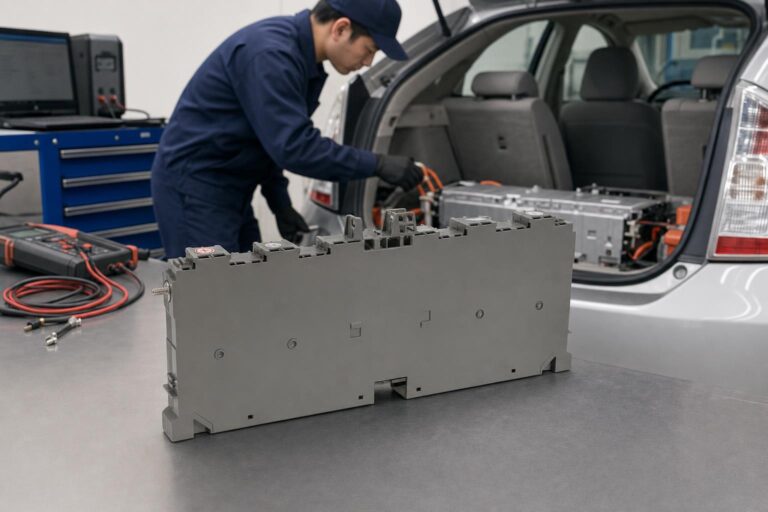
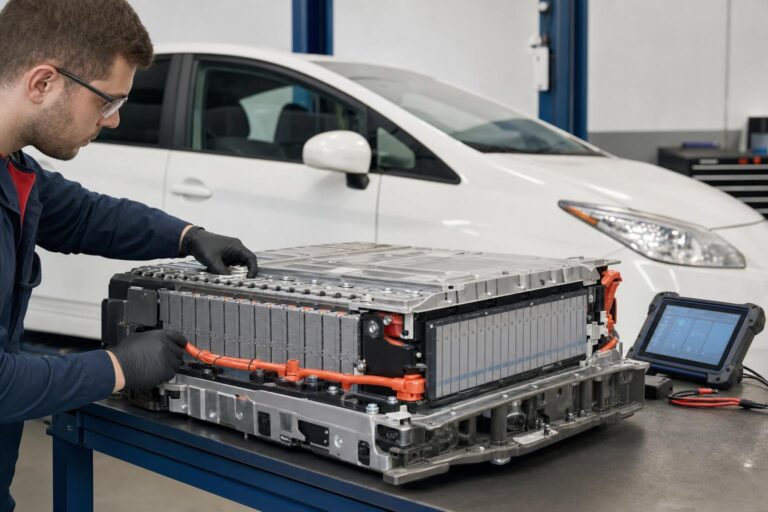
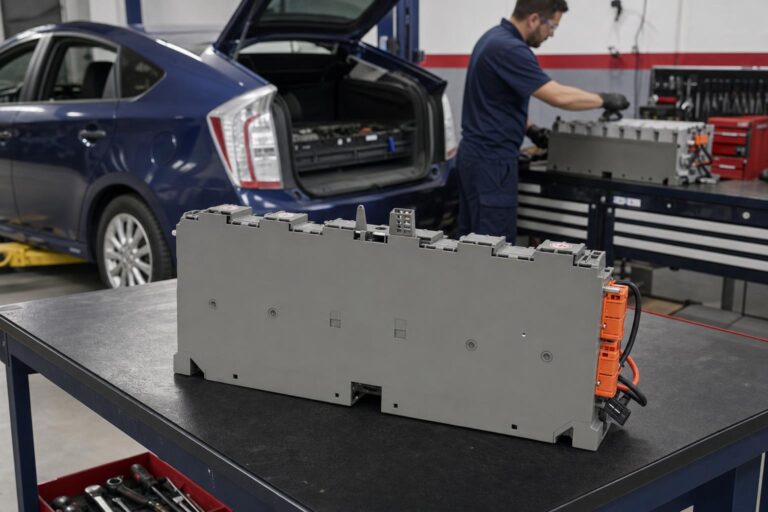
Uzticami hibrīda akumulatoru risinājumi































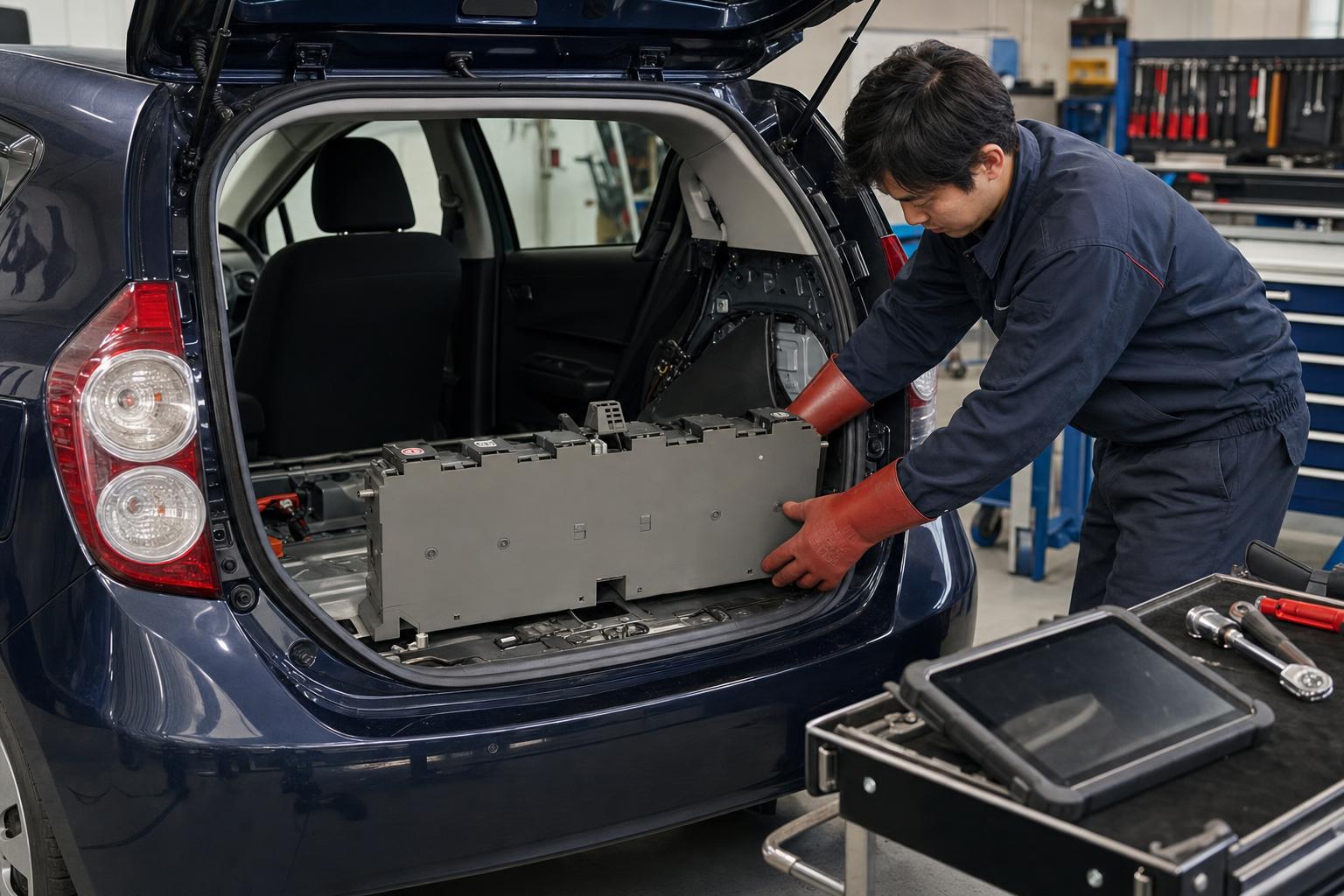
Toyota Aqua / Prius C (NHP10) akumulatora nomaiņa: uzstādīšana, bojājumu pazīmes un jauna NiMH avota iegūšana
Everything repair shops, distributors and fleet buyers need to source a Toyota Aqua / Prius C (NHP10) hybrid battery replacement — from failure symptoms and fitment years to new versus reconditioned trade-offs and warranty considerations.

The Toyota Aqua battery replacement question almost always comes down to one decision: do you fit a lower-cost reconditioned pack, or a new NiMH battery built to OEM specification? For independent repair shops, hybrid specialists, parts distributors and fleet operators running the Toyota Aqua — sold as the Prius C in many export markets — the answer depends on how long the vehicle stays in service and how many kilometres it covers each year. This guide covers which vehicles use the NHP10 pack, the failure signals your customers describe, how the replacement options compare, and what to check before you place a bulk or repeat order.
Galvenie secinājumi
- The Toyota Aqua (Japan) and Toyota Prius C (export markets) both use the NHP10 platform, roughly 2011–2020, with 2012–2015 units now the most common candidates for battery service.
- Typical failure signs include a hybrid warning light, shorter EV-only running, a loud, constantly running battery cooling fan, and a noticeable fuel-economy drop.
- Third-party providers commonly price reconditioned Aqua packs lower with shorter warranties, while new OEM-spec NiMH packs cost more but suit long-term and high-kilometre use.
- For taxi, rideshare and delivery fleets, a new NiMH replacement built to OEM specification usually offers the more predictable total cost of ownership.
- Cross-border buyers should confirm fitment, warranty terms, lead times and dangerous-goods shipping requirements before ordering.
Which Toyota Aqua / Prius C models use the NHP10 battery
The first-generation Toyota Aqua carries the internal chassis code NHP10. It launched in Japan in 2011 and was exported to many markets as the Toyota Prius C. The two names describe essentially the same compact full-hybrid vehicle built on the same platform, powered by a 1.5-litre engine paired with a nickel-metal hydride (NiMH) high-voltage battery.
When a customer asks about a Toyota Aqua hybrid battery, a Toyota Prius C hybrid battery, or a year-specific pack such as a 2012 Toyota Prius C battery vai 2015 Toyota Prius C battery, they are usually referring to the same NHP10 high-voltage traction pack. One replacement product line typically covers the full NHP10 run from roughly 2011 to 2020, and a Toyota Aqua replacement service listing covering the 2011–2021 range confirms that single-model coverage is standard in the aftermarket (Hybrid Automotives, AU).
Why 2012–2015 units dominate service demand
A 2026 Toyota Aqua buyer’s guide notes that the high-voltage pack typically lasts 8 to 12 years, and that many 2012–2015 model-year Aquas are now moving into the failure-risk window (MyAutoShop NZ). That aligns with the search demand your business is likely seeing: the earliest NHP10 vehicles are now old enough that original packs are reaching end of life, which is why enquiries for a Toyota Aqua hybrid battery for sale cluster around these years.
Common failure symptoms repair shops see
A failing NHP10 pack rarely dies without warning. Your customers and your own diagnostic scans usually reveal a familiar pattern before the vehicle becomes undriveable. Recognising these signs early helps you quote accurately and order the right part the first time.
- Hybrid system warning light / red triangle of death. The master warning light with a hybrid-system message is the clearest indicator. A scan often returns battery-related fault codes pointing to weak or imbalanced modules.
- Reduced EV-only running. The car spends less time in electric mode and the petrol engine runs more often, even at low speed.
- Loud, constantly running cooling fan. The battery cooling fan (located in the rear seat area) runs hard and often as the pack struggles to manage heat from degraded cells.
- Noticeable fuel-economy drop. Because the engine works harder to compensate for weak battery assistance, real-world economy falls — often the first thing a fleet operator notices on fuel reports.
- Neregulāra uzlādes stāvokļa uzvedība. The dash charge gauge swings quickly between full and empty, a classic sign of imbalanced module capacity.
These symptoms confirm the pack is the problem, but professional diagnosis should always rule out related items such as the cooling system, the hybrid inverter, and 12-volt auxiliary battery faults before committing to a high-voltage battery replacement.
Replacement options compared: reconditioned vs new OEM-spec NiMH
There are two mainstream ways to restore an Aqua / Prius C: fit a reconditioned pack (used modules, tested and rebalanced) or fit a new NiMH battery built to OEM specification using brand-new cells. Each has a clear place, and the right choice depends on the vehicle’s remaining service life.
Independent providers describe the trade-off directly: reconditioned Toyota Aqua batteries are cheaper but may last only 2–3 years, while OEM-spec replacements can last 6–8 years with proper care, with many providers offering 2-year or 100,000 km warranties (Hybrid Automotives, AU). A separate New Zealand comparison lists reconditioned packs at roughly NZ$1,600–$2,000 with a 12-month/20,000 km warranty, versus a brand-new OEM pack at roughly NZ$3,600–$4,000 with a 36-month/60,000 km warranty (Sterling Cars NZ).
| Factor | Atjaunots iepakojums | Jauns OEM specifikācijas NiMH akumulators |
|---|---|---|
| Šūnu stāvoklis | Used modules, tested and rebalanced | Tikai pilnīgi jaunas šūnas |
| Typical upfront cost | Lower | Higher |
| Expected service life (per third-party providers) | Shorter (commonly cited 2–3 years) | Longer (commonly cited 6–8 years) |
| Warranty offered (third-party examples) | Often ~12 months / 20,000 km | Often 2–3 years / 60,000–200,000 km |
| Best suited to | Short-term ownership, resale prep | Long-term keepers, high-km and fleet use |
The pricing and warranty figures above are drawn from third-party New Zealand and Australian service providers and describe their offers, not OKACC’s. Confirm current terms with your chosen supplier before quoting.
Why new NiMH suits fleet and rideshare use
For taxi, rideshare and delivery operators, the maths usually favours a new battery. A reconditioned pack with a short warranty can look attractive on a single invoice, but a second failure inside two years means paying again for labour, downtime and lost earning days. High-kilometre duty cycles simply push used modules toward the end of their capacity faster.
The aftermarket recognises this split. One NHP10 replacement product for the 2012–2020 range is built using brand-new cells and offered with a 3-year/200,000 km warranty for private buyers or a 2-year/unlimited-kilometre warranty for commercial customers such as taxi, rideshare and delivery vehicles (InfiniteV NZ). The separate commercial term exists precisely because fleet duty is harder on batteries — and that is exactly the scenario where new cells earn their higher upfront cost.
OKACC positions its Aqua-relevant products as jauni OEM specifikāciju NiMH hibrīda akumulatoru aizvietotāji, designed to meet the original battery’s specification and built with brand-new cells rather than salvaged modules. You can review the broader hibrīda akumulatoru produktu klāsts to see how model coverage is structured for resale and repeat ordering.
Typical professional replacement workflow
The NHP10 pack operates at hazardous high voltage, so replacement is a job for trained technicians with the correct insulated tools and personal protective equipment. Toyota New Zealand states that genuine hybrid battery replacement typically takes 2–3 hours and should only be carried out by trained professionals (Toyota New Zealand). At a high level, a professional workflow looks like this:
- Diagnosis and verification. Scan for fault codes, confirm the battery is the root cause, and rule out cooling, inverter and 12-volt faults.
- Safe shutdown and isolation. Power down the hybrid system and isolate the high-voltage circuit using the correct service procedure before any disconnection.
- Removal and inspection. Remove the pack, inspect the battery bay, cooling duct and fan for dust or debris, and clean as needed.
- Installation of the replacement. Fit the new pack, reconnect the high-voltage and low-voltage connections, and secure all mounts and covers.
- System reset and verification. Clear codes, allow the system to establish a new state-of-charge baseline, and road-test to confirm normal hybrid operation and cooling-fan behaviour.
Because the exact procedure varies by tooling and market, follow the manufacturer’s documented high-voltage safety steps for your workshop. This article is a sourcing and specification guide, not a substitute for factory service instructions.
Warranty and total-cost-of-ownership considerations
For a business, the sticker price is only part of the picture. When you compare quotes, weigh these factors together:
- Warranty length and terms. A longer warranty on a new pack reduces your exposure to repeat labour costs. Note whether kilometre limits differ for private versus commercial use — as several providers apply separate fleet terms.
- Labour and downtime per fitment. A 2–3 hour job repeated because a cheap pack failed early erodes any upfront saving quickly.
- Expected retention period. A vehicle heading for resale within a year may justify a reconditioned pack; a long-term or fleet vehicle rarely does.
- Core-charge and return logistics. Some suppliers require the old pack back. Factor return shipping of a dangerous-goods item into landed cost.
Toyota New Zealand describes genuine hybrid battery replacement generally costing between NZ$2,000 and NZ$4,000 with a 5-year/100,000 km warranty against manufacturing or assembly defects when fitted through an authorised channel (Toyota New Zealand). Use figures like these as market reference points when you set resale pricing, but always validate your own supplier’s terms.
Sourcing considerations for distributors and repair shops outside China
If you are buying to resell, stock or fit at scale, the sourcing conversation extends well beyond a single part number. Before committing to a bulk or repeat-order relationship, confirm the following:
- Fitment confirmation. Verify the pack is specified for the NHP10 Aqua / Prius C and matches the model years you service. Never assume year coverage — confirm it against the supplier’s own fitment data.
- New cells, clearly stated. Confirm in writing that packs are built with brand-new cells rather than salvaged modules if that is what you are buying and reselling.
- Garantijas dokumentācija. Get the written warranty terms, including any separate commercial/fleet conditions, so you can pass accurate terms to your customers.
- Lead times and MOQs. Understand production and shipping lead times, minimum order quantities and re-order timelines so you can plan stock without over-committing capital.
- Dangerous-goods shipping. High-voltage NiMH packs move as regulated goods. Confirm packaging, documentation and carrier requirements for your route before the first shipment.
Quality consistency across repeat orders matters most for a reseller’s reputation, which is why it is worth reviewing a supplier’s OKACC kvalitātes nodrošināšana processes before you build a stocking programme. When you are ready to discuss model coverage, warranty terms and volumes for the Aqua / Prius C line, you can pieprasīt tehnisko piedāvājumu with your target model years and quantities.
For questions about logistics, documentation or partnership arrangements, sazinieties ar OKACC directly to align on specifications and shipping requirements before your first order.
Bieži uzdotie jautājumi
Are the Toyota Aqua and Toyota Prius C the same for battery purposes?
For the first generation, yes. The Aqua (Japanese market) and Prius C (export markets) share the NHP10 platform and the same NiMH high-voltage battery architecture, so a replacement pack specified for the NHP10 typically fits both. Always confirm fitment against the supplier’s data for your specific year.
How long does a Toyota Aqua hybrid battery last?
A 2026 buyer’s guide states the NHP10 high-voltage pack typically lasts 8 to 12 years, with many 2012–2015 vehicles now entering the failure-risk window. Actual life depends on climate, duty cycle and how well the cooling system has been maintained.
Should I choose reconditioned or new for a taxi or rideshare Aqua?
For high-kilometre fleet vehicles, a new NiMH pack built to OEM specification usually offers more predictable total cost of ownership. Reconditioned packs carry shorter warranties and, per third-party providers, may last only 2–3 years — meaning repeat labour and downtime for a busy vehicle.
What does replacement cost, and how long does it take?
Costs vary widely by market and option. Toyota New Zealand describes genuine replacement generally costing NZ$2,000–$4,000, while third-party providers list reconditioned packs lower and new OEM-spec packs higher. The fitting itself typically takes 2–3 hours for a trained technician.
Can the battery be replaced as a DIY job?
No. The NHP10 pack operates at hazardous high voltage and must be handled only by trained professionals using insulated tools, correct PPE and the documented safe-isolation procedure. Treat replacement as a workshop job, not a home repair.
Which model years does a single Aqua replacement pack usually cover?
Aftermarket NHP10 replacement lines commonly cover the full first-generation run from roughly 2011 to 2020 (some listings extend to 2021). Year-specific searches such as 2012, 2013, 2014 or 2015 Prius C generally point to the same NHP10 pack — but verify coverage before ordering.
Kas izplatītājiem jāapstiprina pirms vairumtirdzniecības pasūtījuma veikšanas?
Confirm fitment for your model years, that packs use brand-new cells if sold as new, written warranty terms (including any commercial/fleet conditions), lead times, minimum order quantities, and dangerous-goods shipping requirements for your route.
Whether your enquiries read as a Toyota Aqua battery replacement, an Aqua hybrid battery, or a year-specific 2013 Toyota Prius C battery, they point to the same NHP10 pack and the same core decision. Get the fitment, warranty and sourcing terms confirmed up front, and the choice between reconditioned and new becomes a straightforward business calculation.