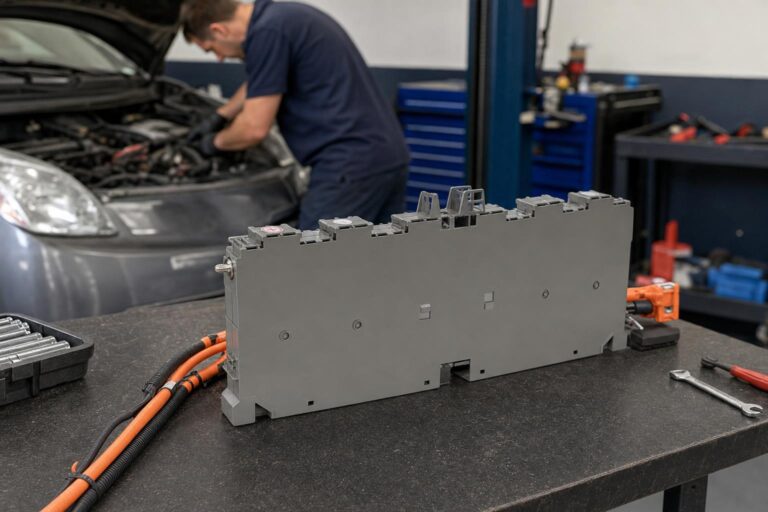
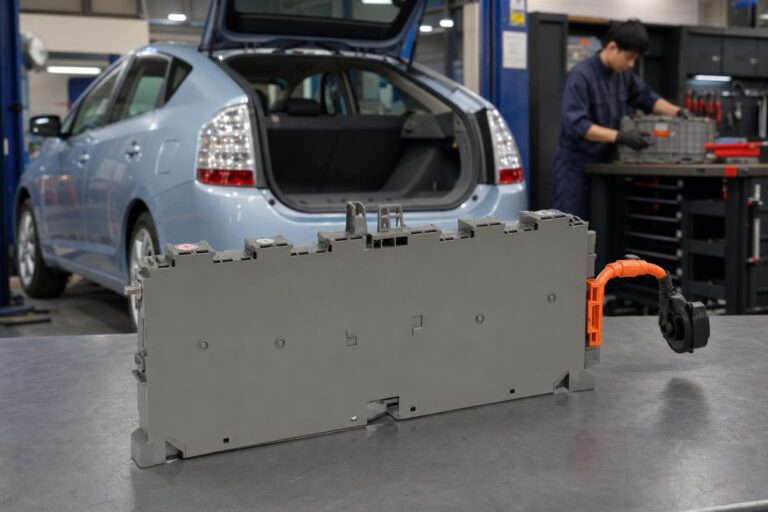
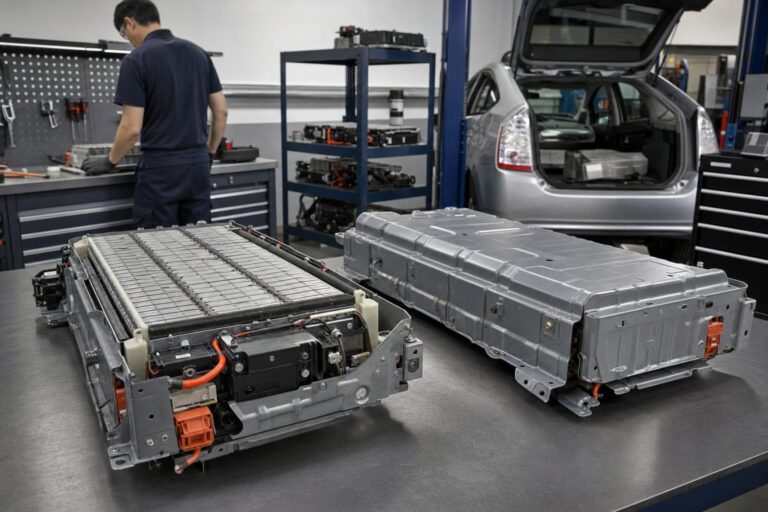
Güvenilir Hibrit Pil Çözümleri



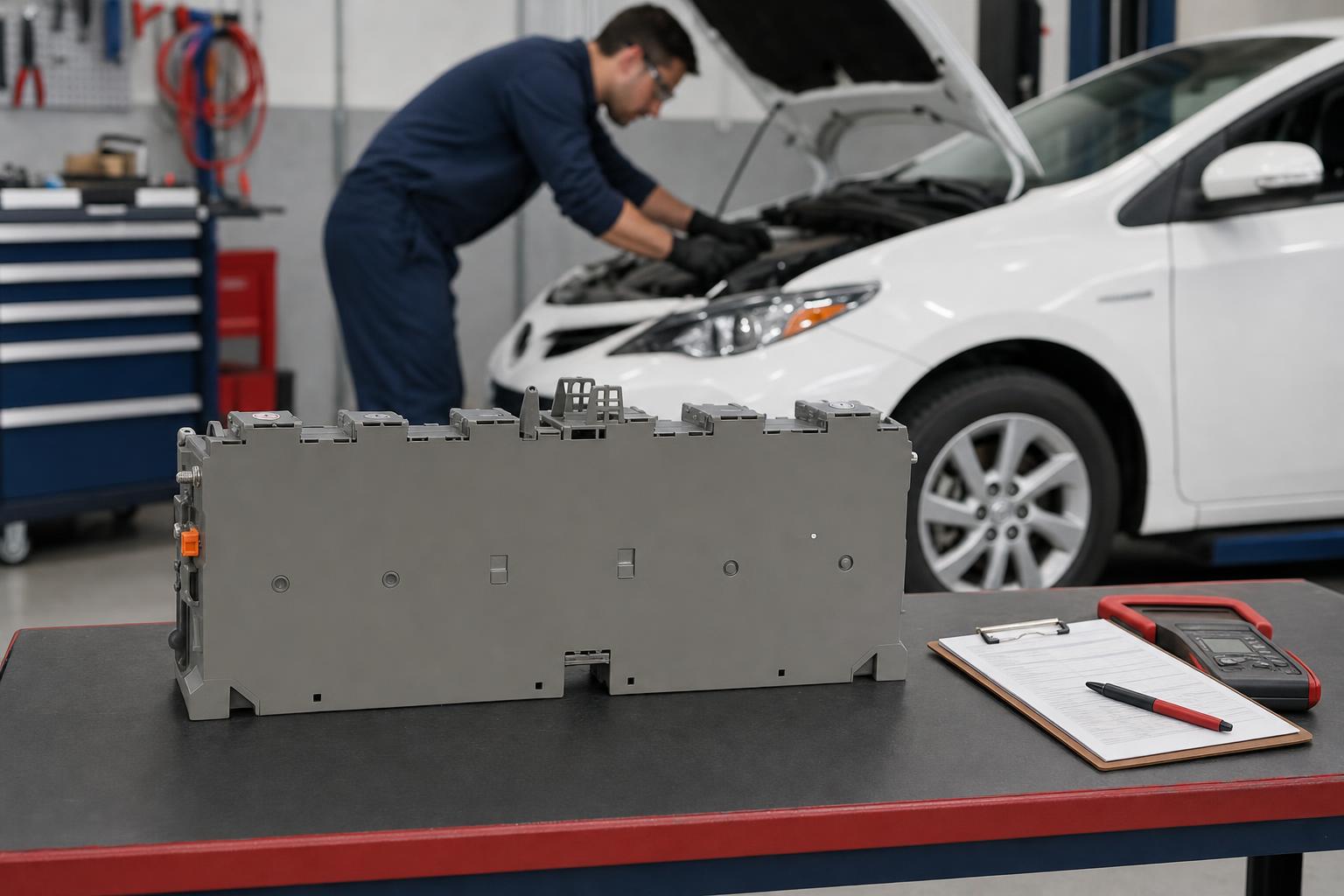
2014 Toyota Prius Hibrit Batarya Fiyatı: Batarya Tipi ve Mağaza Seçimi Fiyat Teklifini Nasıl Belirliyor?
2026 yılında Toyota Prius hibrit batarya fiyatlarına dair maliyet keşif kılavuzu. OKACC yalnızca yeni, orijinal ekipman üreticisi (OEM) spesifikasyonlarına uygun NiMH batarya paketleri tedarik etmektedir; kullanılmış ve yeniden üretilmiş batarya seçenekleri, tamir atölyeleri, distribütörler ve filoların fiyat tekliflerini doğru bir şekilde okuyabilmeleri ve doğru yedek batarya paketini temin edebilmeleri için piyasa bağlamı olarak ele alınmıştır.

In 2026, a 2014 Toyota Prius hybrid battery price lands anywhere from roughly $800 for a used salvage pack to $5,500 installed at a dealer, depending almost entirely on the type of pack and who fits it. That is a wide spread for the same vehicle, and it is the single most confusing thing buyers face when they request quotes. This guide explains what each price tier actually buys, why the figures diverge so sharply, and what repair shops, distributors and fleet operators outside China should verify before committing to a replacement NiMH pack.
The 2014 Prius is a third-generation car (chassis code XW30, model years 2010–2015). Its high-voltage traction battery is a nickel-metal hydride (NiMH) pack built from 1.2-volt cells grouped into modules. When that pack degrades, the car typically throws a hybrid-system warning and loses fuel economy long before it stops running. Understanding the pack architecture and the replacement routes available is what separates a defensible purchase from an expensive guess.
Önemli noktalar
- 2026 quotes for a 2014 Prius hybrid battery range from about $800 (used salvage) to $5,500+ (new OEM at a dealer), driven mainly by pack type and shop.
- RepairPal’s 2026 estimator puts a dealer-style job at roughly $4,463–$4,708 total, with parts near $3,939 and labor $525–$770.
- Independent hybrid shops commonly fit a new OEM-spec pack for far less than a dealer, but warranty length and testing rigor vary widely by supplier.
- Whether a 2014 Prius is still under Toyota’s original hybrid warranty depends on the registration state/region, not the model year alone.
- For B2B buyers, the real decision is total cost of ownership: pack quality, cell matching, documentation and lead time matter more than headline price.
OKACC supplies brand-new OEM-spec NiMH hybrid batteries only — never remanufactured, reconditioned or used stock. The used, reconditioned and remanufactured price bands in this guide are provided for market-context comparison only and are third-party figures, not OKACC pricing.
What drives the 2014 Toyota Prius hybrid battery price
Four factors explain almost every quote you will see for a 2014 Toyota Prius hybrid battery replacement:
- Pack type. A brand-new OEM-spec NiMH pack, a remanufactured pack, a reconditioned/rebuilt pack and a used salvage pack are four different products at four different price points. This is the biggest single driver.
- Labor hours and shop type. The physical replacement is usually 1.5–3 hours. A franchised Toyota dealer charges a higher labor rate than an independent hybrid specialist, and often bundles a more expensive part.
- Region and local market. Labor rates, parts availability, import duties and local demand all move the installed price.
- Core charge and disposal policy. Many suppliers levy a refundable core charge on the old pack. Whether that is included, refundable or separate changes the effective price.
Because these variables stack, two honest quotes for the same car can differ by thousands of dollars without either party being wrong. The job of a professional buyer is to normalise quotes to the same pack type, warranty and inclusions before comparing them. When the chosen route is a brand-new pack, it is worth checking a supplier’s specifications and hibrit batarya ürün yelpazesi against the Gen 3 Prius requirement before narrowing down quotes.
One chemistry caution before comparing figures: the 2012–2015 Prius Plug-in (PHV) uses a lithium-ion pack, not the NiMH pack fitted to the standard Gen 3 liftback. Confirm you are quoting the correct variant and never cross-apply prices or fitment between the two.
Typical 2026 cost ranges for a Gen 3 (2010–2015) Prius battery
The published 2026 cost data for the third-generation Prius gives a useful set of reference bands. These are third-party shop and estimator figures, not OKACC prices, and they vary by region. Because they reflect figures published in the dated sources cited below, treat them as directional and re-verify current pricing at the time you quote:
| Yedek rota | Typical 2026 installed price | Notlar |
|---|---|---|
| Kullanılmış / kurtarılmış paket | ~$800–$2,200 | Lowest upfront cost, shortest warranty, unknown remaining life (market context only — not an OKACC category) |
| Yenilenmiş / yeniden yapılmış | ~$1,500–$3,500 | Quality depends heavily on the rebuilder’s process (market context only — not an OKACC category) |
| Remanufactured (specialist) | ~$1,200–$2,800 | Gen 3 often quoted $1,500–$2,500 fitted (market context only — not an OKACC category) |
| New OEM-spec, independent shop | ~$2,000–$4,500 | Pack ~$1,700–$3,800 plus 1.5–3 hours labor (SupercarDigest 2026) |
| New at a Toyota dealer | ~$2,800–$5,500+ | Blends EVrepairdirectory ($2,800–$4,200) and SupercarDigest ($3,000–$5,500) dealer figures; dealer warranty and process included |
OKACC supplies new OEM-spec packs only; the used, reconditioned and remanufactured rows above are listed for market-context comparison and are not products OKACC offers.
For a single consolidated reference, RepairPal’s 2014 Prius estimator shows an average total of $4,463–$4,708 for a hybrid high-voltage battery replacement, with labor estimated at $525–$770 and parts near $3,939 — a figure that reflects a dealer-style, new-part job. A 2026 cost-guide roundup reports new OEM Prius packs installed at roughly $2,000–$4,500 at independent hybrid shops versus $3,000–$5,500 at dealerships, with remanufactured packs around $1,200–$2,800 and used salvage packs about $800–$1,800. A generation-specific breakdown from an EV/hybrid repair directory lists Gen 3 (2010–2015) out-of-warranty prices at $1,500–$2,500 remanufactured and $2,800–$4,200 new at a Toyota dealer, with module-level repair at $650–$1,400. Buyers scoping the brand-new route can review how production and testing are documented on the OKACC kalite güvencesi page while normalising these third-party bands.
Dealer versus independent shop: what is actually included
The gap between dealer and independent pricing is not only the part. It reflects differences in what the price covers:
- Warranty length. Dealers typically attach the manufacturer’s replacement-part warranty. Independent shops and specialists set their own terms, which range from one year to several years depending on the pack source and the shop’s confidence in it.
- Teşhis ücretleri. A proper diagnosis confirms the fault is the traction battery and not a cooling fan, a single failing module, or an auxiliary 12V battery. Some quotes fold this in; others bill it separately.
- Core handling and disposal. NiMH packs are recyclable and classed as dangerous goods for transport. Responsible shops include lawful disposal or core return; cheaper quotes sometimes do not.
For a 2014 Prius that is well out of warranty, the decision usually comes down to balancing upfront price against expected pack life and the warranty backing it. That is where pack type matters most.
Warranty status: why the 2014 model year is not a simple answer
Many buyers assume a 2014 Prius is automatically out of warranty. The honest answer is: it depends on the registration region. Toyota’s hybrid component warranty is commonly cited as 8 yıl / 100.000 mil in most U.S. states, extended to 10 yıl / 150.000 mil in states that follow California emissions rules — including California, New York, Massachusetts, Oregon, Washington and Colorado, among others. As the repair-directory breakdown notes, coverage status for any given 2014 Prius therefore depends on where it is registered and how it has been used.
For international buyers outside the United States, those specific warranty terms may not apply at all, and local Toyota distributor terms govern instead. The practical point is the same: always confirm the exact coverage on the specific vehicle before assuming a replacement must be paid out of pocket, because an in-warranty pack changes the whole economic calculation.
Signs a 2014 Prius hybrid battery needs replacement
Accurate diagnosis protects the final price. A pack replaced when the real fault was elsewhere is wasted money; a misdiagnosed fault left in place leads to repeat visits. Common indicators that the high-voltage NiMH pack is failing include:
- A hybrid-system or master warning (triangle) light, often alongside a check-engine light.
- Stored codes in the P0A80 family pointing to the hybrid battery pack.
- A noticeable drop in fuel economy as the pack can no longer buffer energy effectively.
- Şarj durumunun düzensiz davranışı — göstergenin dolu ve boş arasında hızla gidip gelmesi.
- A battery cooling fan running harder or longer, or blocked cooling vents raising pack temperatures.
High-voltage safety note: the Gen 3 Prius traction pack operates at well over 200 volts and is dangerous to handle. Diagnosis and replacement must be carried out by trained technicians only, who remove the service-disconnect (safety) plug, use insulated gloves and tools, and follow proper lockout procedures. This article is a sourcing and cost reference, not a DIY instruction. A qualified technician should read fault codes and check individual module voltages before quoting. Whether the fix is a full pack or a module-level repair materially changes the price, so diagnosis is not an optional extra.
New OEM-spec, remanufactured and used packs compared
These three routes are genuinely different products, and understanding the trade-offs is the core of a good purchase decision.
Yeni OEM özellikli NiMH piller
OKACC supplies new NiMH hybrid battery replacements as brand-new units built to meet OEM specifications — never refurbished, reconditioned or remanufactured stock. A brand-new OEM-spec NiMH pack is manufactured new and designed to meet OEM specifications rather than reusing aged cells. Because every cell starts at full capacity, a new pack offers the most predictable lifespan and the clearest total-cost-of-ownership case — particularly for operators who keep vehicles long enough that a second replacement would otherwise be likely.
Remanufactured and reconditioned packs
These reuse the original casing and some components, typically replacing or re-balancing weak modules. Quality depends entirely on the rebuilder’s testing discipline and which cells are reused. A reputable remanufacturer that matches and tests every module offers better value than a quick reconditioning job, but the variability between providers is high. OKACC does not supply this category; it is described here only so buyers can compare the wider market accurately.
Used / salvage packs
Pulled from donor vehicles, these are the cheapest option but carry the most uncertainty. A salvage pack from a 2010–2015 Prius is already several years into its service life, so remaining capacity is unknown and warranties are short. For a fleet or resale operation needing predictable uptime, the low headline price can be offset by higher failure risk. This is also not an OKACC category and is included for market context only.
A 2026 replace-or-scrap decision guide summarises installed cost ranges by route — used salvage $800–$2,200, reconditioned/rebuilt $1,500–$3,500, remanufactured $1,500–$2,500, and new OEM at a dealer $3,500–$5,000+, with labor alone around $500–$1,000 at an independent shop — which lines up closely with the other published data and reinforces how much the pack source drives the final number.
Uluslararası B2B alıcıları için tedarik rehberi
For repair shops, distributors and fleet buyers outside China, the quoted price is only part of the picture. Before ordering replacement NiMH packs for 2014 Prius work, verify the following with any supplier:
- Hücre eşleştirme ve test etme. Ask how cells or modules are matched, tested and balanced, and whether test data is provided per pack. Consistent cell matching is central to pack longevity.
- Fitment data. Confirm the pack is specified for the Gen 3 XW30 (2010–2015) Prius liftback NiMH application — not the Plug-in lithium-ion variant — and request the supplier’s own verified fitment documentation rather than assuming compatibility.
- Dokümantasyon. Require specifications, test reports and any quality-control records from the manufacturer.
- Lead time and stock visibility. For fleet and resale operations, predictable supply matters as much as price. Confirm lead times before committing to a job schedule.
- Shipping and import. NiMH traction packs (UN 3496) are regulated dangerous goods, with the most detailed requirements applying to sea transport under the IMDG framework and comparatively lighter rules for road and air movements in many markets. Confirm packaging, labelling and the documentation needed for lawful cross-border movement into your market, and factor duties into the landed cost.
To scope pricing and fitment for a specific program, you can teknik fiyat teklifi isteyin with your vehicle and volume details.
What “designed to meet OEM specifications” means in practice
A new OEM-spec pack is engineered to match the voltage, capacity, module layout and physical envelope the vehicle’s hybrid control system expects, so it integrates with the existing wiring, cooling and battery management without workarounds. This is distinct from a remanufactured pack, which reuses the original housing and some aged components, and from a used pack, which is simply an older assembly transferred from a donor car. The distinction matters because it is the clearest predictor of how the pack will behave over its service life — and for a professional buyer, predictable behaviour is what underpins a defensible warranty position with the end customer.
Sıkça sorulan sorular
What is the average 2014 Prius battery replacement cost in 2026?
Published 2026 figures range widely by source: RepairPal’s estimator shows about $4,463–$4,708 for a dealer-style job, while independent-shop guides report roughly $2,000–$4,500 for a new OEM-spec pack and $800–$2,800 for used or remanufactured options. Always normalise quotes to the same pack type and warranty before comparing, and re-verify current pricing at the time you quote.
Why do quotes for the same car vary so much?
The biggest driver is pack type — used salvage, reconditioned, remanufactured and brand-new OEM-spec are four different products. Shop type (dealer versus independent), labor rate, region, core charges and warranty length then widen the spread further.
How long should a replacement 2014 Prius hybrid battery last?
A brand-new OEM-spec NiMH pack (such as OKACC products) starts at full capacity and offers the most predictable lifespan. Used packs carry unknown remaining life and remanufactured packs vary significantly by rebuilder, so neither is directly comparable. Actual life also depends on climate, usage and cooling-system condition.
Can an independent repair shop install a third-party pack?
Yes. Many independent hybrid specialists routinely fit non-dealer packs. The key is confirming the pack is specified for the Gen 3 XW30 Prius with verified fitment data, and that the installer is a trained technician who follows safe high-voltage procedures — removing the service-disconnect plug and using insulated gloves and tools — and reads fault codes before and after the job.
Is a 2014 Prius still under Toyota’s hybrid warranty?
It depends on the registration region. Toyota’s hybrid component warranty is commonly cited as 8 years/100,000 miles in most U.S. states and 10 years/150,000 miles in California-emissions states. Coverage outside the U.S. follows local distributor terms. Always confirm the exact vehicle’s status before assuming it is out of warranty.
Does a dashboard warning always mean the whole pack needs replacing?
No. A hybrid warning or P0A80 code can stem from a single weak module, a cooling fault or a related issue. A technician should read codes and check module voltages first, because module-level repair is far cheaper than a full pack if that is the actual fault.
What should B2B buyers verify before ordering NiMH packs?
Confirm cell-matching and testing methods, request verified Gen 3 liftback NiMH fitment documentation (not the Plug-in lithium-ion variant), obtain specifications and quality records, check lead times, and clarify UN 3496 dangerous-goods shipping and import requirements for your market so the landed cost and schedule are realistic.
Next steps for comparing 2014 Prius battery quotes
The practical path is straightforward. Decide which replacement route fits your operation’s priorities — lowest upfront cost, best total cost of ownership, or the strongest warranty position. Then collect quotes that specify the same pack type and inclusions, confirm warranty status on each specific vehicle, and insist on verified fitment and test documentation from any supplier. For a new OEM-spec NiMH option sourced to meet OEM specifications, or to discuss program volumes and lead times, OKACC ile iletişime geçin with your vehicle and quantity details. Reading a 2014 Toyota Prius hybrid battery price accurately is less about finding the lowest number and more about knowing exactly what that number buys.