信頼できるハイブリッドバッテリーソリューション































カムリハイブリッドバッテリー価格(2007年~2015年):モデルイヤーと情報源別の見積もり($1,500~$6,200)
トヨタ・カムリのハイブリッドバッテリーの価格を、年式別および調達チャネル別に比較した実用的なコスト比較ガイド。修理工場、フリート事業者、販売代理店が自信を持って見積もりや購入を行うのに役立ちます。.

の Camry hybrid battery price most buyers encounter falls into a wide band: roughly $1,500 for a refurbished pack at the low end to more than $6,000 for a dealer-installed OEM replacement. Independent estimator data places the average dealer high-voltage battery replacement between $6,006 and $6,205, while specialist and aftermarket channels routinely quote far less. The reason quotes vary so much is simple: the price depends on the model year and battery generation, the chemistry, the labour involved, the warranty attached, and — above all — whether the pack is new, remanufactured, or used.
This guide breaks down what a Camry Hybrid battery actually costs across the 2007–2015 model years, explains each sourcing channel, and gives repair shops, fleet operators and distributors a framework for evaluating total cost of ownership before committing to a purchase.
主なポイント
- Camry Hybrid battery quotes span roughly $1,500 to over $6,200 depending on model year, sourcing channel and whether the pack is new, refurbished or used.
- Dealer OEM replacement is the highest-cost route; independent estimator data cites an average of $6,006–$6,205 including labour.
- Refurbished and remanufactured packs start lower but typically carry shorter warranties and variable module quality.
- All 2007–2015 Camry Hybrid packs use nickel-metal hydride (NiMH) chemistry, which remains the highest-demand replacement segment.
- A new OEM-spec NiMH replacement can offer a middle ground between low-cost used packs and expensive dealer OEM, provided the seller documents specifications.
Why Camry Hybrid battery prices vary so widely
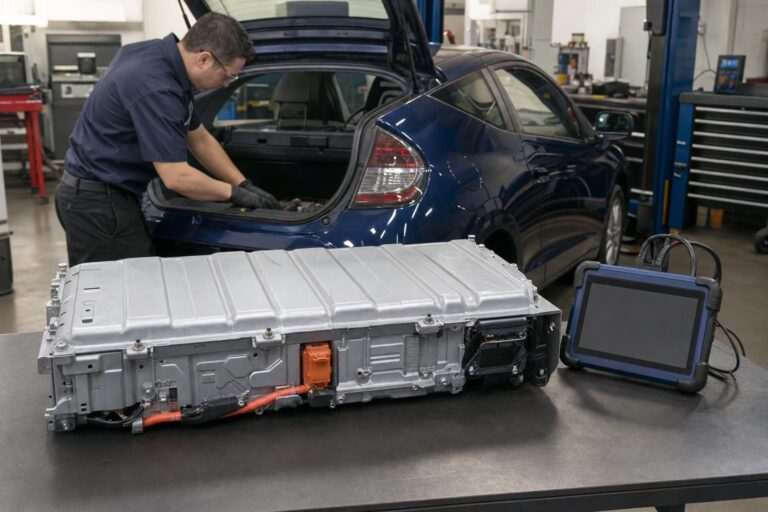
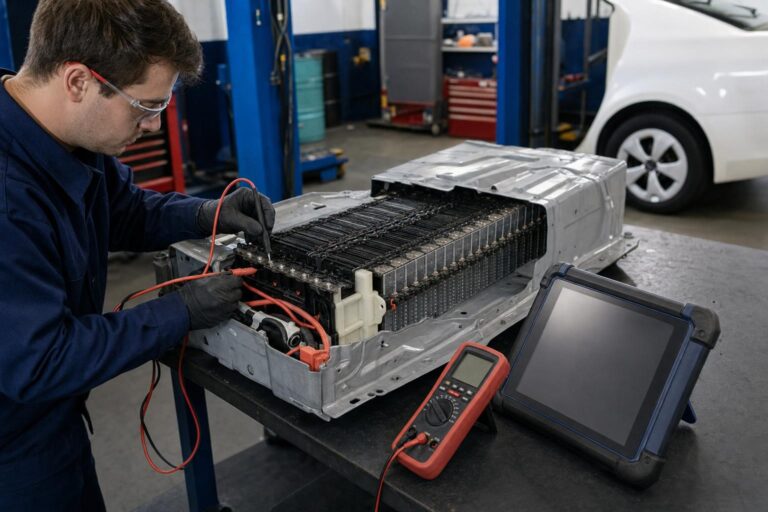
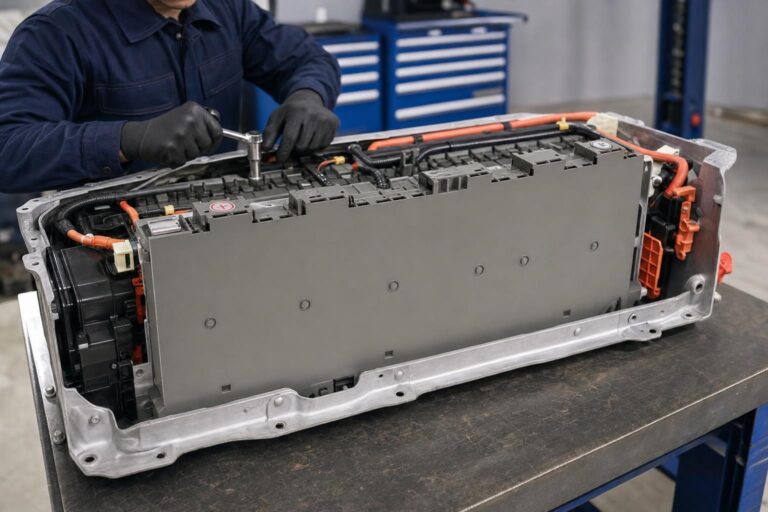
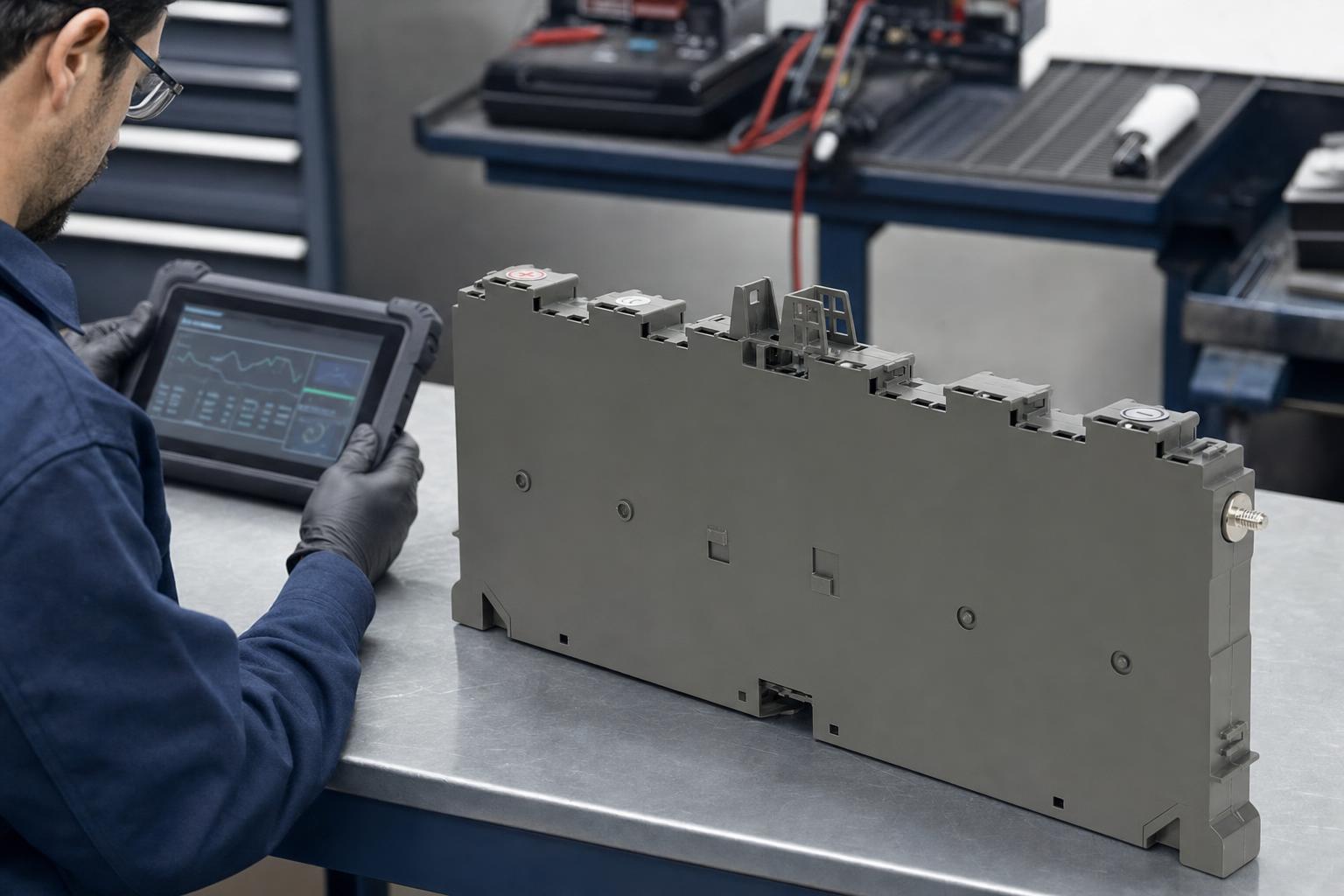
Before comparing numbers, it helps to understand what a hybrid battery pack is. In a Toyota Camry Hybrid, the high-voltage (HV) traction battery is a sealed pack of individual nickel-metal hydride (NiMH) modules wired in series. This pack powers the electric motor and is entirely separate from the small 12-volt battery that runs the lights and accessories. When people search for a Camry hybrid battery price, they almost always mean this HV traction pack. Buyers comparing options for a specific vehicle can cross-reference specifications against a model-specific category such as the OKACC カムリ listing to confirm the generation before quoting.
Five factors drive the final quote:
- 生成と化学。. The 2007–2015 Camry Hybrid uses NiMH modules. Pack architecture and module count differ between generations, which affects part cost and fitment.
- New vs. refurbished vs. used. This is the single biggest cost driver. A brand-new pack costs more than a remanufactured one, which in turn costs more than a salvage/used unit.
- Labour. Removal and installation of an HV pack is skilled work. Estimator data puts Camry labour at roughly $427 to $627, though independent shops and mobile installers vary.
- Warranty. A longer warranty typically raises the purchase price but lowers long-term risk. Refurbished packs often carry shorter coverage than new ones.
- Core and disposal fees. Many sellers require the old pack as a returnable core, and safe disposal or recycling of a high-voltage battery carries a cost that may or may not be bundled into the quote.
Because these variables stack, a single vehicle can attract quotes that differ by a factor of four. J.D. Power’s shopping guide, for example, suggests an ideal replacement range of $3,000~$5,000, while other outlets cite dealer figures running up to $8,000 out of warranty.
Camry Hybrid generations at a glance
Understanding which generation a vehicle belongs to is the first step in sourcing the correct pack. Across the model years covered by most buyer searches:
Generation 1 (2007–2011)
The first Camry Hybrid (XV40 platform) introduced Toyota Hybrid Synergy Drive to the Camry line. It uses a NiMH HV pack. These vehicles are now well past a decade old, so battery demand is strong — original packs are reaching the end of their service life across the fleet.
Generation 2 (2012–2017)
The XV50 Camry Hybrid retained NiMH chemistry with a revised pack. Vehicles from this era represent an emerging replacement segment, and packs for 2012–2015 are among the most frequently quoted in the aftermarket.
Generation 3 (2018 and newer)
Newer Camry Hybrids use updated battery designs. These vehicles are largely still within their useful life, so replacement demand is lower and dealer channels dominate. TopSpeed notes Toyota does not publish a direct list price for the current Camry pack in its online parts catalogue, citing owner-reported figures around $3,000 alongside factory coverage of 120 months/150,000 miles for the hybrid battery against defects.
For this reason, the 2007–2015 NiMH segment is the highest-demand replacement market, and it is where most B2B sourcing decisions are made. Buyers evaluating this range should verify pack fitment against the exact vehicle before ordering, since pack architecture differs between generations.
Price comparison: dealer OEM vs. refurbished vs. new OEM-spec aftermarket
The table below consolidates publicly reported price bands by sourcing channel. These figures are drawn from third-party estimators and specialists and are indicative only; they are ない OKACC pricing and will vary by region, labour rate, taxes and core arrangements.
| 調達チャネル | Typical price band (pack + install) | Warranty (typical) | Best-fit buyer |
|---|---|---|---|
| Dealer OEM replacement | ~$2,000–$8,000; estimator average $6,006–$6,205 | メーカー規約 | In-warranty vehicles; owners prioritising dealer service |
| Independent specialist — refurbished/remanufactured | ~$1,500 upward; used packs from ~$500–$1,500 | Shorter (often months to a few years) | Cost-sensitive one-off repairs; older, high-mileage cars |
| 新しいOEM仕様のアフターマーケットNiMH | ~$3,000–$4,000 for new packs* (some longer warranties) | Longer (varies by supplier) | Repair shops, fleets and distributors wanting new stock and predictable performance |
* The new OEM-spec aftermarket band ($3,000–$4,000) derives from CarBuzz’s reported brand-new pack figures and is indicative, not an OKACC price.
The band figures above reflect several sources. CarBuzz reports out-of-warranty dealer replacement between $2,000 and $8,000, refurbished packs starting around $1,500, and brand-new packs around $3,000–$4,000 with warranties often four to five years, some up to six. Gemba Automotive places the overall range at $2,500 to $6,000 depending on year, battery type and warranty, noting OEM packs cost more than remanufactured alternatives. Specialist installers publish concrete figures too: Hybrid Battery 911 lists Gen 1 (2007–2011) mobile-installed pricing at $1,899 and $3,599, and Gen 2 (2012–2017) at $2,199 and $3,699, inclusive of battery, installation and disposal but excluding sales tax.
Model-year cost notes: 2007 through 2015
Search demand clusters around specific years, so here is what to expect for each — and why the calculus shifts with age and mileage.
2007 and 2008 Camry Hybrid
These earliest Gen 1 cars are the oldest in the fleet. Original packs are typically well beyond design life, so replacement is common. Because the vehicles carry lower residual value, many owners resist dealer OEM quotes and lean toward refurbished or new aftermarket options. Expect 2007 Camry Hybrid battery replacement costs to sit at the lower-to-mid end of the channel table above when going aftermarket.
2009, 2010 and 2011 Camry Hybrid
Still Gen 1, still NiMH. Replacement cost for a 2009 Toyota Camry Hybrid battery is one of the most-searched variants, reflecting how many of these cars are now on their second battery. Pricing mirrors the 2007–2008 pattern, though slightly newer vehicles may justify a longer-warranty new pack given remaining chassis life.
2012, 2013, 2014 and 2015 Camry Hybrid
These Gen 2 cars command marginally higher pack costs than Gen 1 in specialist pricing (Hybrid Battery 911’s Gen 2 figures run a little above Gen 1). Replacement costs for the 2012 Camry Hybrid and later model years make these cars attractive candidates for new OEM-spec packs, because the vehicles usually have enough remaining service life to reward a longer warranty. For a 2014 or 2015 car in good condition, spending more on a new pack often produces the lowest cost-per-year of ownership.
A useful rule of thumb for quoting: the older and higher-mileage the vehicle, the more a low-cost pack makes sense; the newer and cleaner the car, the stronger the case for a new, longer-warranty replacement.
Total cost of ownership for B2B buyers and fleets
Headline pack price is only part of the picture. For repair shops and fleet operators quoting jobs, total cost of ownership (TCO) is the real metric. Consider:
- Warranty length divided by price. A $3,500 pack with a five-year warranty can cost less per year than a $1,600 refurbished unit warranted for six months, if the cheaper pack fails early.
- Labour repeatability. Every reinstall costs labour. A pack that has to be replaced twice erases its own savings and damages customer trust.
- Core and disposal. Confirm whether the quote includes taking the old pack and safe recycling, or whether these are extra.
- Downtime. For fleets, a vehicle off the road is a cost in itself; predictable, in-stock new packs reduce that risk versus waiting for a matched refurbished unit.
The Auto Insider Blog’s breakdown is a helpful reference for structuring quotes: it estimates OEM packs at $2,000–$5,000, refurbished at $1,000–$2,500, used at $500–$1,500, and labour at $300–$1,000. Reading a customer quote against those bands quickly reveals which channel a shop is using. Distributors sourcing new stock at scale can compare specifications across the OKACC ハイブリッドバッテリー製品群 when building a TCO model.
Signs a Camry Hybrid battery needs replacement
Before committing to any purchase, confirm the pack is genuinely the fault. Common indicators include:
- Illuminated hybrid warning light or the master warning triangle, often with diagnostic trouble codes in the P0A80 family.
- Noticeably reduced fuel economy as the vehicle leans more heavily on the engine.
- Erratic state-of-charge behaviour — the display swinging quickly between full and empty.
- Reduced electric assist, sluggish acceleration, or the engine running when it previously would not.
- Excessive cooling-fan activity around the battery pack.
A proper diagnostic scan should confirm the pack before purchase, since some symptoms overlap with cooling-system, inverter or sensor faults. High-voltage systems are dangerous; battery removal and installation should only be performed by trained technicians with the correct insulated tools and safety procedures.
Why a new OEM-spec NiMH replacement can be the value choice
Between a costly dealer OEM pack and an uncertain used unit sits a practical middle option: a New OEM-spec NiMH Hybrid Battery Replacement, designed to meet OEM specifications. For repair shops and distributors, new packs offer advantages that matter to margins and reputation:
- Consistency. New modules across the pack avoid the mixed-age cell problem that can shorten the life of a refurbished unit.
- Stockability. New inventory is easier to forecast and reorder than salvage-dependent refurbished supply.
- Cleaner quoting. A predictable unit cost lets shops quote confidently and protect margin.
According to OKACC, its packs are supplied as new NiMH replacements built to meet OEM specifications — not refurbished, reconditioned or used, and not represented as genuine Toyota parts. Buyers evaluating specifications and process controls can review the OKACC品質保証 documentation before requesting fitment confirmation. Always verify exact compatibility for the target vehicle and year rather than assuming cross-generation fit.
Buying checklist for shops, fleets and distributors
- Confirm the model year and generation, and verify pack fitment against the specific vehicle — do not assume Gen 1 and Gen 2 packs interchange.
- Establish whether the pack is new, remanufactured or used, and get that in writing.
- Compare warranty length and terms, not just headline price; calculate cost-per-year.
- Clarify what the quote includes: pack, labour, core return, taxes and disposal.
- For fleets, weigh downtime and reorder lead time as part of TCO.
- Request documented specifications from any aftermarket supplier before ordering volume.
- For multi-unit or recurring needs, negotiate stocking terms rather than buying pack-by-pack.
When you are ready to validate fitment and pricing for a specific year, 技術見積もりを依頼する with the vehicle details, or OKACCに連絡してください to discuss stocking and volume requirements.
よくある質問
What is the average Camry Hybrid battery price?
It depends heavily on the sourcing channel. Independent estimator data puts the average dealer high-voltage battery replacement at $6,006–$6,205 including labour, while refurbished packs start around $1,500 and new aftermarket packs commonly run about $3,000–$4,000. Always compare like-for-like on condition and warranty.
How much does a 2009 Toyota Camry Hybrid battery replacement cost?
A 2009 Camry is a Generation 1 NiMH vehicle. Because these cars are older, many owners choose refurbished or new aftermarket packs rather than dealer OEM. Specialist Gen 1 installed pricing has been published in the roughly $1,900–$3,600 range (excluding sales tax), though your local labour rate and pack choice will move the final figure.
Why is a dealer quote so much higher than an aftermarket one?
Dealer quotes reflect genuine OEM parts pricing plus dealer labour, and out-of-warranty figures have been reported as high as $8,000. Independent specialists and aftermarket suppliers often price lower because they use refurbished, remanufactured or new OEM-spec packs and different labour structures.
Is a refurbished pack a good idea for a fleet?
It can be for older, lower-value vehicles, but refurbished packs typically carry shorter warranties and can mix module ages. For fleets that value predictable downtime and reorderability, a new pack with a longer warranty often produces a lower total cost of ownership despite the higher upfront price.
Do 2007–2015 Camry Hybrid packs use the same battery?
All use NiMH chemistry, but Generation 1 (2007–2011) and Generation 2 (2012–2017) packs differ in architecture and are not universally interchangeable. Always verify fitment against the exact model year before ordering.
Does Toyota publish a list price for the newer Camry pack?
Reporting indicates Toyota does not list a direct manufacturer price for the current Camry’s replacement pack in its online parts catalogue, with owner-reported HEV pack costs cited around $3,000 and factory hybrid battery coverage of 120 months/150,000 miles against defects.
Are OKACC Camry batteries genuine Toyota parts?
No. OKACC supplies new NiMH hybrid battery replacements designed to meet OEM specifications. They are not refurbished or used, and they are not genuine Toyota, Toyota-approved or Toyota-affiliated products. Confirm exact fitment for your vehicle and year before purchase.