Důvěryhodná hybridní bateriová řešení































Výměna baterie Honda CR-Z: Proč NiMH a lithium-iontové baterie potřebují různé roky výroby dílů
The Honda CR-Z used two different hybrid battery chemistries across its life. Here is how to confirm which pack your car needs, recognise failure, compare replacement paths and source a dependable new OEM-spec NiMH IMA battery.

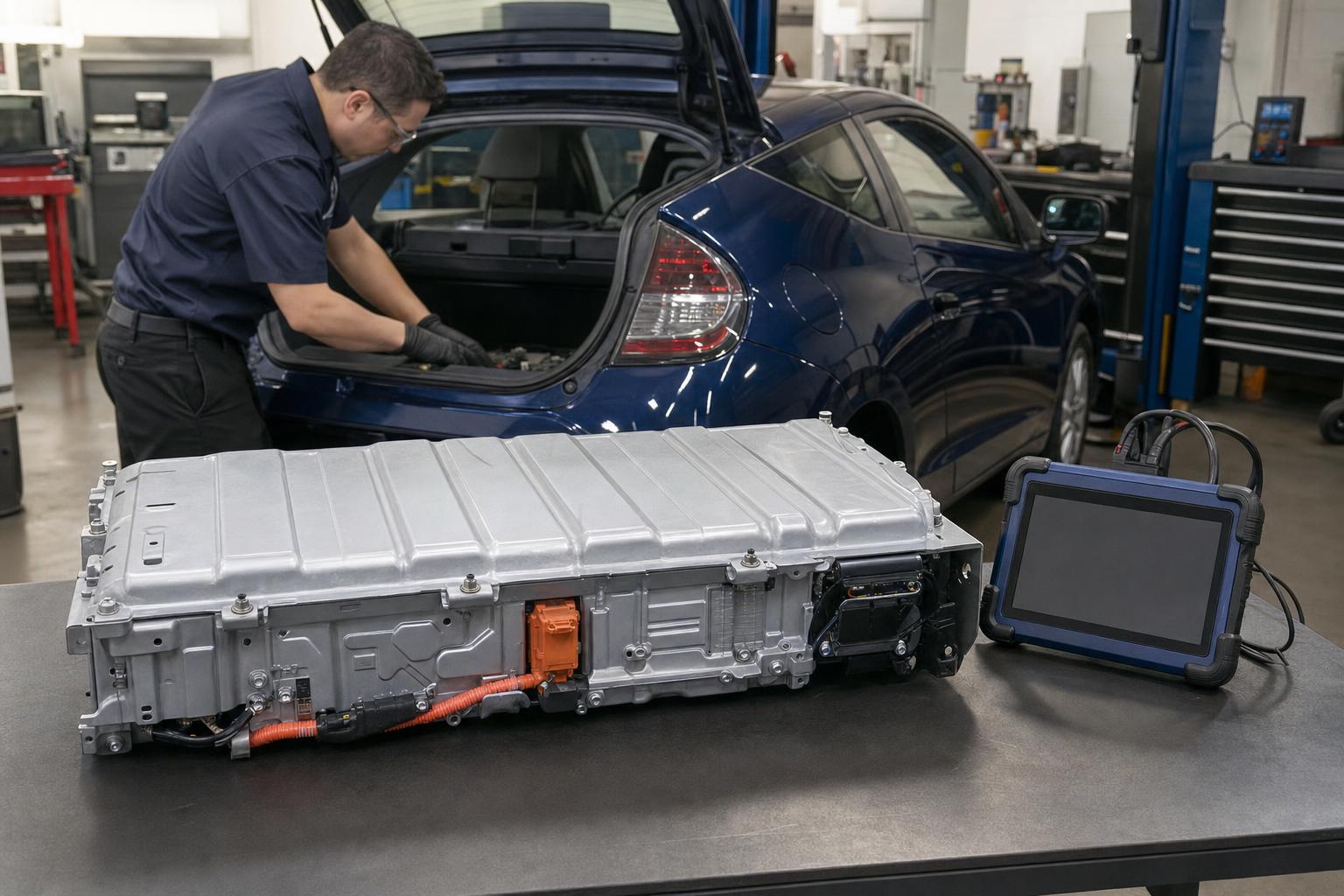
A Honda CR-Z battery replacement does not have one single answer, because the car was never built with a single hybrid battery chemistry. Roughly the 2010–2012 model years use a nickel-metal-hydride (NiMH) Integrated Motor Assist (IMA) pack, while the 2013 facelift onward switched to a 144-volt lithium-ion pack. The two are not interchangeable, and that distinction decides everything about sourcing, pricing and realistic repair options. For the NiMH generation, a brand-new OEM-spec NiMH pack is the most dependable, warrantable path — and that is where independent repair shops, resellers and fleet buyers should focus their purchasing.
This guide explains how to identify your CR-Z’s chemistry, how a failing IMA pack behaves, how the common replacement options compare, and what B2B buyers should verify before committing to a supplier.
Klíčové poznatky
- The Honda CR-Z used two distinct chemistries: a serviceable NiMH IMA pack (~2010–2012) and a 144V lithium-ion pack (2013 facelift onward) that owner-forum reports indicate Honda does not supply as a replacement part.
- Confirm the exact model year and pack generation before quoting or ordering — a part that fits one generation will not fit the other.
- Independent cost estimates for a CR-Z high-voltage battery replacement run into several thousand dollars, with parts the dominant cost driver.
- For the 2010–2012 NiMH cars, a new OEM-spec NiMH hybrid battery avoids reliance on scarce used lithium packs and gives consistent cell performance with warranty backing.
- High-voltage work requires a trained technician; this is not a safe DIY job.
Two chemistries, not one: why the CR-Z splits into two answers
When a buyer searches for a Honda CR-Z hybrid battery, the single most important step is pinning down the model year. The CR-Z’s IMA system — Honda’s mild-hybrid architecture that provides electric assist to the petrol engine — did not keep the same battery throughout production.
According to an independent CR-Z replacement reference, the earlier cars (approximately 2010–2012) carry a nickel-metal-hydride pack, while the 2013 facelift and later use a 144-volt lithium-ion pack. These are different cell chemistries with different module construction, different charge behaviour and different battery management. You cannot drop a NiMH pack into a lithium-generation car, or the reverse.
This matters commercially. The NiMH generation has a mature, well-understood replacement path. The lithium generation is harder: owner discussion on the CR-Z enthusiast forum notes that Honda does not supply replacement 144-volt lithium-ion IMA packs for the facelift (S+ button) models, which pushes those owners toward scarce used or rebuilt units. For resellers and shops, this means demand concentrates where a reliable new pack actually exists — the NiMH cars.
How to tell which pack a specific CR-Z has
Use the model year and the car’s feature set together. The post-facelift cars introduced the “S+” boost button, which is tied to the lithium-ion system. When in doubt, verify against the VIN and build year rather than guessing. A 2011 Honda CR-Z battery replacement, for example, is firmly in NiMH territory; for a 2013-or-later car, treat it as lithium until proven otherwise.
Recognising a failing CR-Z hybrid battery
A degrading CR-Z IMA battery rarely fails silently. The symptoms tend to accumulate as the pack loses usable capacity and cell balance drifts:
- IMA warning light on the dashboard, sometimes alongside a check-engine indicator.
- Erratic state-of-charge gauge — the battery bars jump quickly between full and empty, or swing without matching driving behaviour.
- Reduced electric assist, so the engine works harder and the car feels flatter under acceleration.
- Noticeable fuel-economy drop as the hybrid system contributes less.
- Weak or absent Sport/assist response in cars that rely on the IMA boost.
These signs point to the high-voltage IMA pack rather than the conventional 12V starter battery. Confirm which battery is implicated before quoting, because the two are entirely different parts with very different costs.
Diagnostic basics for the NiMH generation
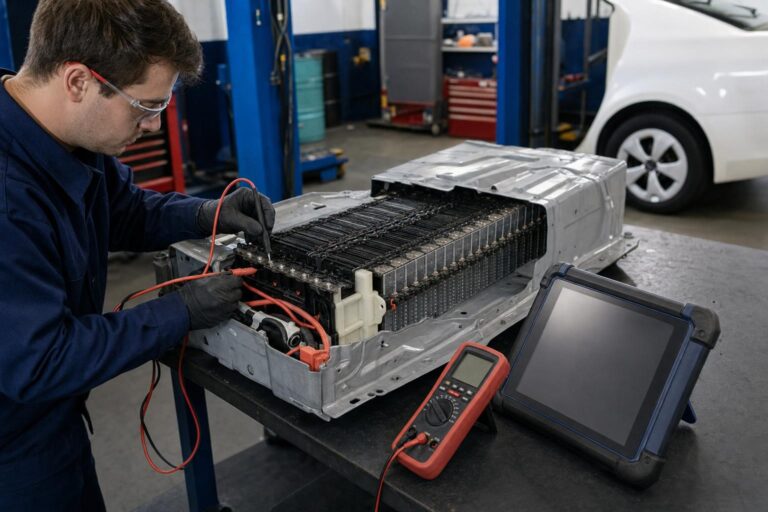
Proper diagnosis uses a scan tool capable of reading the IMA/hybrid system, not just a generic OBD-II reader. A technician should review live data — individual module or block voltages, state-of-charge behaviour and any stored hybrid-system codes — before concluding the pack needs replacement. Some fault codes are commonly associated with IMA battery deterioration, but the exact code set should always be verified with current professional diagnostic equipment and Honda service documentation rather than assumed. A thorough diagnostic also rules out contributing issues such as a tired 12V battery, cooling-fan problems or sensor faults that can mimic pack failure.
Replacement paths compared
For a Honda CR-Z hybrid battery replacement on the NiMH generation, four broad routes exist. Each carries a different risk, cost and availability profile.
| Volba | Typical profile | Main risk for B2B buyers |
|---|---|---|
| Dealer-sourced OEM part | Highest predictability where stocked; priced accordingly | Availability and pricing vary by market; confirm before quoting a customer |
| Použité / havarijní balení | Lowest upfront cost; unknown remaining life | Unverified cell condition, short or no warranty, variable age |
| Rebuilt / remanufactured pack | Reuses older cells, often blended | Inconsistent cell matching; longevity depends heavily on build quality |
| Nový NiMH akumulátor dle specifikace výrobce | All-new cells built to meet OEM specifications | Verify supplier documentation and warranty terms upfront |
The lithium generation sits outside this table because, as noted above, Honda reportedly does not supply a replacement lithium IMA pack for facelift cars — which is exactly why the practical, supplyable market is the NiMH generation.
Why a new OEM-spec NiMH pack is the dependable choice for 2010–2012
For the NiMH cars, a new OEM-spec NiMH hybrid battery is the option that most reliably restores the car to normal operation and gives a shop or fleet something it can stand behind. The reasons are straightforward:
- Consistent cell performance. All-new, matched cells behave uniformly, which supports stable state-of-charge readings and predictable assist — unlike mixed-age cells in used or rebuilt packs.
- Warranty backing. A new pack from a documented supplier comes with defined warranty terms, which matters when you are reselling or installing under your own shop guarantee.
- No dependency on scarce used stock. Because the lithium generation’s used packs are hard to source, shops that standardise on new NiMH packs for the 2010–2012 cars avoid competing for unpredictable salvage inventory.
OKACC dodává sortiment hybridních baterií that includes new NiMH hybrid battery replacements designed to meet OEM specifications for the NiMH IMA generation. These are brand-new packs — not refurbished, reconditioned or used units — intended for professional installation. Buyers who need to validate build consistency can review OKACC’s Zajištění kvality OKACC documentation before committing to an order.
What B2B buyers and repair shops should verify before purchasing
Whether you are a distributor, a reseller or a shop buying for installation, confirm these points in writing before placing an order:
- Generation match. Confirm the pack is the NiMH IMA type for the 2010–2012 CR-Z, not a part intended for a different chemistry or a different Honda hybrid.
- Voltage and capacity specification. Verify the pack meets the OEM voltage and capacity targets for the NiMH IMA system.
- Brand-new status. Insist on all-new cells. Ask the supplier to state explicitly that the pack is new, not rebuilt from harvested modules.
- Záruční podmínky. Get the warranty period and coverage conditions documented. Do not rely on verbal assurances.
- Supplier documentation. Request specification sheets and any quality documentation so your own customers or compliance records are supported.
- Shipping compliance. Hybrid battery packs are regulated for cross-border transport; confirm the supplier can provide the correct dangerous-goods documentation for your route.
If you need help matching a specific CR-Z build to the right NiMH pack, you can vyžádejte si technickou cenovou nabídku with the vehicle year and VIN details to confirm fitment before you order.
Instalace a bezpečnost při vysokém napětí
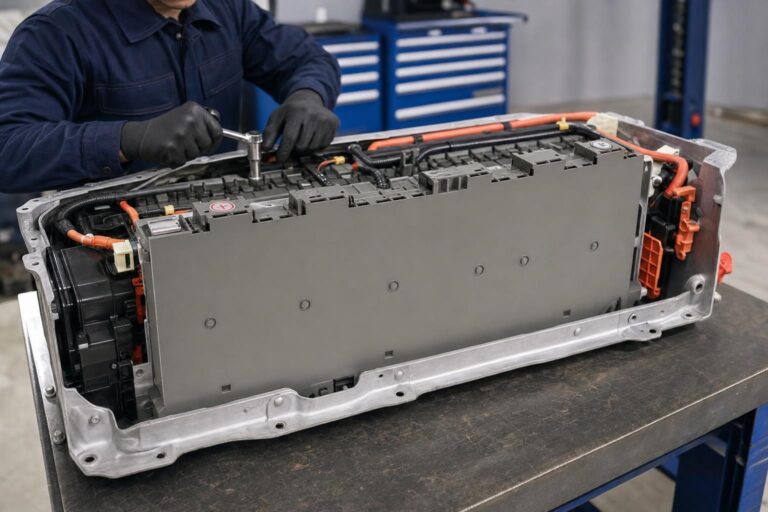
A CR-Z hybrid pack is a high-voltage component and must be handled only by a technician trained in high-voltage safety. The vehicle must be properly de-energised, with the service disconnect removed and the correct personal protective equipment used, before any work on the pack begins. This is not a safe do-it-yourself task, and nothing in this article should be treated as step-by-step installation instruction. Professional installation also protects the warranty on a new pack and ensures the hybrid system is correctly reinitialised afterward.
Cost context for planning quotes
Battery cost is the dominant line item in a CR-Z hybrid replacement. An independent US-market repair-cost estimator for the Honda CR-Z hybrid high-voltage battery replacement (estimates last updated September 2026) puts the average total between roughly $3,274 and $3,411, with labour estimated between $293 and $430 and parts priced around $2,981. These are US figures: totals in other regions will differ with local labour rates, taxes and import costs, so treat them as a benchmark for the scale of the repair rather than a universal quote. They also underline why sourcing matters — the part cost, not the labour, is where buyers have the most leverage.
For resellers and fleets, standardising on a new OEM-spec NiMH pack converts an unpredictable salvage-market gamble into a repeatable, documented line item you can quote with confidence.
Často kladené otázky
Is my CR-Z a NiMH or a lithium-ion car?
It depends on model year. Roughly the 2010–2012 CR-Z uses a nickel-metal-hydride IMA pack, while the 2013 facelift onward uses a 144-volt lithium-ion pack. The post-facelift cars added the “S+” boost button. Always confirm against the VIN and build year before ordering, because the two chemistries are not interchangeable.
Can I buy a replacement lithium-ion pack from Honda for the facelift CR-Z?
Owner reports on a CR-Z enthusiast forum indicate that Honda does not supply replacement 144-volt lithium-ion IMA packs for facelift (S+ button) models. That concentrates replacement demand on used or rebuilt units for those cars, and is one reason the NiMH generation has the more dependable supply path.
What does a CR-Z hybrid battery replacement typically cost?
An independent US-market estimator puts the average high-voltage battery replacement for the CR-Z at roughly $3,274 to $3,411, with parts around $2,981 and labour between $293 and $430. Treat this as a planning benchmark; actual pricing varies by region, labour rate and which replacement option you select.
Is a new OEM-spec NiMH pack better than a used or rebuilt one?
For reliability and warranty, yes. A new pack built to OEM specifications uses all-new, matched cells, which supports consistent performance and stable state-of-charge behaviour. Used and rebuilt packs carry unknown remaining life and mixed-age cells, which raises the risk of early repeat failure.
What warranty should I expect on a new NiMH pack?
Warranty terms vary by supplier, so confirm the period and coverage conditions in writing before ordering. A documented new pack from a reputable supplier should come with defined warranty terms you can pass on to your own customer or record for compliance.
Can I install a CR-Z hybrid battery myself?
No. The pack is a high-voltage component that must be handled by a technician trained in high-voltage safety, with the system properly de-energised first. Professional installation is required both for safety and to protect the warranty on a new pack.
Sourcing guidance for shops and fleets
The practical takeaway for anyone buying a Honda CR-Z battery is to lead with chemistry identification, then choose a replacement path that you can stand behind. For the 2010–2012 NiMH generation, a new OEM-spec NiMH IMA pack gives the cleanest combination of consistent performance, documented warranty and a supply chain that does not depend on scarce salvage inventory. For the lithium-generation facelift cars, recognise up front that owner-forum reports indicate Honda does not offer a replacement part, and set customer expectations accordingly.
If you are evaluating new NiMH packs for CR-Z work — whether as a repair shop, a distributor or a fleet operator — share the model years and volumes you handle and kontaktujte OKACC to confirm fitment, specification and documentation before you build your quotes.