Trusted Hybrid Battery Solutions































How to Replace the Battery in a Prius Key Fob: CR2032 vs CR2450 by Generation
A practical reference for identifying the correct coin-cell battery, replacing it safely, and knowing when a Prius key fob battery swap is a DIY job versus a dealer task.

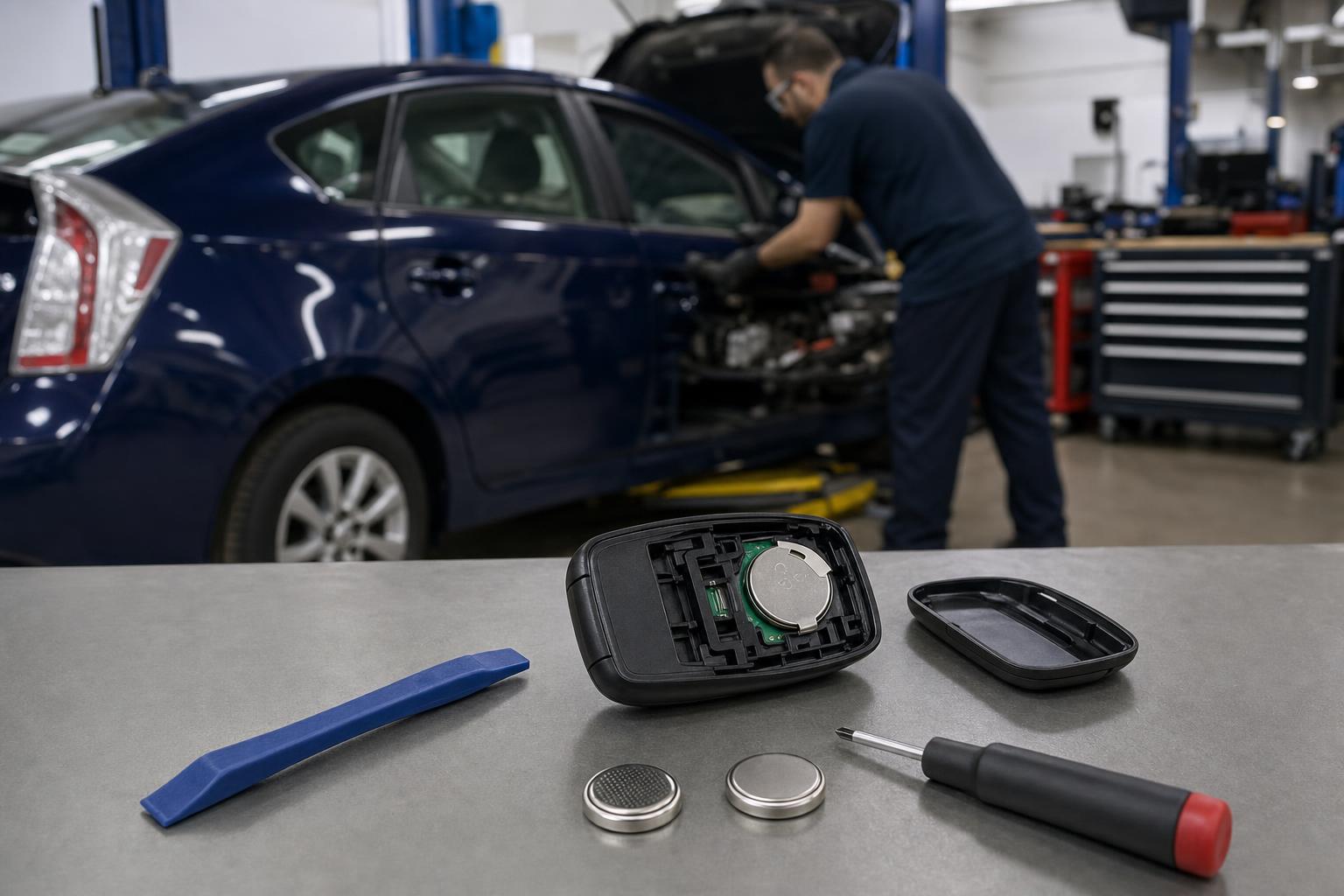
To replace the battery in a Toyota Prius key, you remove the mechanical emergency key blade, split the fob case open, lift out the dead coin cell, and fit a fresh lithium coin cell with the correct polarity. Older rounded Prius smart keys and remotes commonly use a CR2032 cell, while many newer flat, blade-style Prius smart keys use a CR2450. Always confirm by reading the code printed on the old battery or in the owner’s manual, because the exact cell varies by generation and fob style. This is a straightforward job when done carefully, and it is completely separate from servicing the Prius hybrid traction battery.
Key takeaways
- The Prius key fob coin cell is a different component from the Prius hybrid (NiMH) traction battery; the two are unrelated in function, procedure and safety profile.
- Confirm the battery code (commonly CR2032 or CR2450) printed on the old cell before ordering a replacement — it varies by Prius generation and fob shape.
- Toyota documentation lists typical electronic key battery life at 1 to 2 years, with a low-battery warning shown on the display when the hybrid system is stopped.
- In almost all cases the fob keeps its pairing through a battery swap, so no reprogramming is needed.
- Coin and button cells are a serious swallowing hazard; store, handle and dispose of them carefully.
Key fob battery versus hybrid traction battery: do not confuse the two
This is the single most important point for anyone fielding customer calls or training technicians. The Prius key fob battery is a small 3-volt lithium coin cell that powers the remote and smart-key functions — locking, unlocking and proximity detection. It costs very little and is replaced in minutes with a screwdriver and a pry tool.
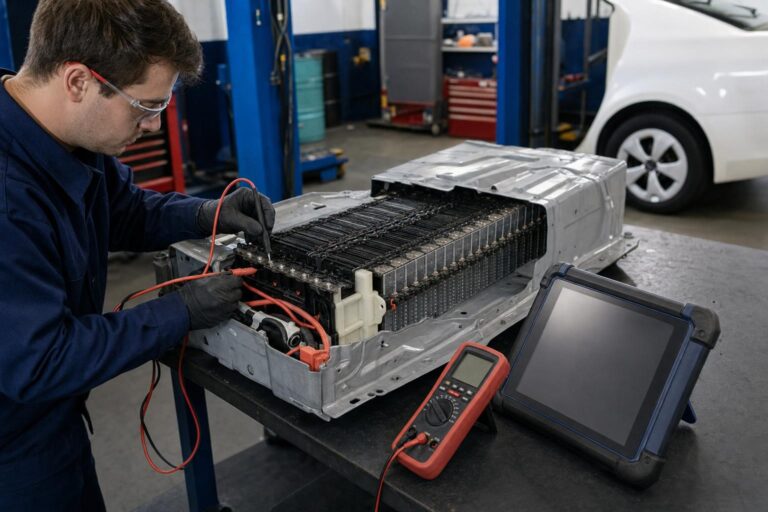
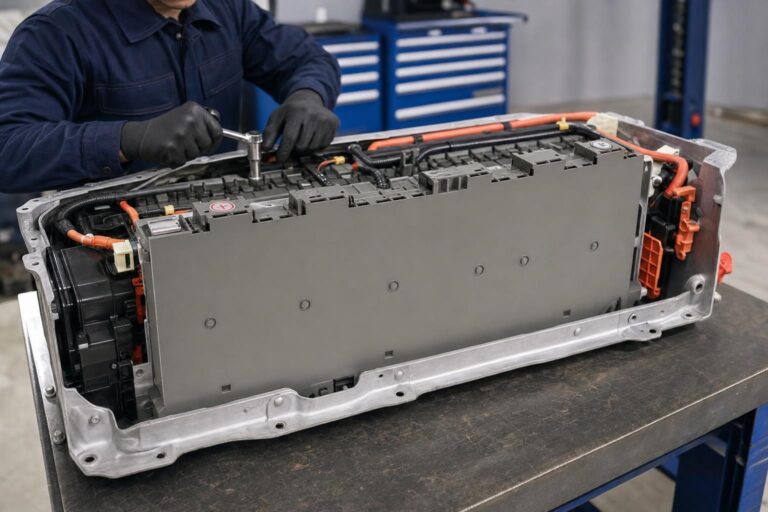
The Prius hybrid traction battery is an entirely different component: a high-voltage nickel-metal-hydride (NiMH) pack that powers the vehicle’s electric drive. It is serviced only by qualified technicians following high-voltage safety procedures and has nothing to do with the key fob. A depleted key fob battery does not cause hybrid system performance faults. For professionals sourcing high-voltage packs, OKACC offers a dedicated hybrid battery product range of brand-new NiMH replacements designed to meet OEM specifications — a separate conversation from the coin-cell job described below.
Signs the Prius key fob battery is low
A weakening coin cell usually produces gradual, recognisable symptoms rather than a sudden total failure:
- Reduced detection range. You have to stand closer to the vehicle before the smart key is recognised, or you press the remote several times before it responds.
- No LED flash. Most Prius fobs blink a small red LED when a button is pressed. A dim or absent flash points to a tired battery.
- Dashboard warning. According to Toyota Prius smart key documentation, the vehicle sounds an in-cabin alarm and shows a low-battery message on the multi-information display when the electronic key battery runs low while the hybrid system is stopped.
- Intermittent operation. The fob works in warm conditions but struggles in cold weather, which stresses an already-depleted cell.
The same Toyota documentation lists typical electronic key battery life at one to two years. For fleet operators, that cadence is predictable enough to batch-replace fob batteries during scheduled servicing rather than waiting for individual lockout calls.
Identifying the correct replacement battery by generation
Prius key fobs have changed shape and cell type across generations, so there is no single universal answer. Use the printed code as your authority.
- Older rounded smart keys and remotes frequently take a CR2032.
- Newer flat, blade-style smart keys often take a CR2450. Toyota DIY maintenance documentation covering the 2024–2025 Prius model years specifies a CR2450 lithium battery for the electronic key, inserted with the “+” terminal facing up.
These codes are directly readable. Pop the old cell out first and read the number stamped on its face (for example, “CR2450” or “CR2032”), or check the owner’s manual for that exact vehicle. Do not assume a model year without verifying, and never fit a cell that is physically similar but a different code — Toyota warns that using the wrong battery type may cause the cell to explode.
Quick reference checklist
| Step | What to confirm |
|---|---|
| 1. Read the old cell | Code printed on the coin battery (CR2032, CR2450 or other) |
| 2. Cross-check | Owner’s manual entry for the electronic key battery |
| 3. Match chemistry | 3V lithium coin cell, correct diameter and thickness |
| 4. Note polarity | Which way the “+” terminal faces in that specific fob |
| 5. Buy spare | Keep a matching cell for the spare key too |
Tools you need
- A small flathead screwdriver or plastic pry tool to split the case without scratching it.
- A micro Phillips screwdriver, since some Prius smart keys are held together by internal screws.
- The correct replacement coin cell, verified by code.
- Clean, dry hands or a soft cloth — skin oils on a coin cell can shorten its life.
Step-by-step: replacing the battery in a Prius key
- Release the mechanical key blade. Slide the small latch on the smart key and pull out the metal emergency blade. On remote-style keys, this step may differ, so follow the fob’s own release.
- Open the case. Use the slot left by the blade, or the seam around the fob, as a starting point. Insert a plastic pry tool or small flathead and gently work the two halves apart. If the fob uses screws, a Toyota parts resource describes removing four internal screws on some Prius smart keys before the battery is accessible.
- Remove the old battery. Note how it sits — specifically which way the “+” side faces — before you lift it out. Take a quick photo if you are unsure.
- Fit the new battery. Insert the fresh cell with the correct polarity. Toyota DIY documentation for the 2024–2025 Prius model years calls for the “+” terminal facing up; the same parts guide describes the positive terminal facing outward toward you on certain smart keys. The point is simple: match the orientation of the cell you removed and confirm against the fob markings.
- Reassemble. Press the halves together until they click, re-fit any screws, and slide the mechanical blade back into place.
- Test. Press a button and watch for the red LED flash, then test lock and unlock at the vehicle. A blinking indicator confirms a successful swap.
Reprogramming is rarely required. A Toyota dealer service guide notes that in almost all cases the fob retains its pairing through a battery change, though a small number of models may need a quick re-sync.
Safety warnings you must not skip
Coin and button cells are deceptively dangerous. Toyota and dealer safety guidance flag them as a serious swallowing hazard: if ingested, they can cause severe chemical burns in as little as two hours. Keep old and new batteries away from children and pets, and dispose of spent cells through proper battery recycling rather than household waste.
- Do not use excessive force when prying the case — a cracked fob shell lets in moisture and can break the internal contacts.
- Keep the fob and its internals dry; wipe away any moisture before reassembly.
- Fit only the verified cell code. The wrong type risks poor contact, leakage or, as Toyota warns, explosion.
- Recycle the old battery; many regions require coin cells to be handled as hazardous waste.
When to DIY and when to use a dealer or repair shop
For most owners and technicians, this is a confident do-it-yourself task. However, Toyota’s own key information page notes that while owners can replace the electronic key battery themselves, Toyota recommends dealer replacement because of the risk of damaging the key.
Use that guidance to triage. Choose DIY when the case opens cleanly, the cell code is clearly readable, and the fob is undamaged. Route the job to a Toyota dealer or an experienced independent shop when the fob is sealed or fragile, when the cell code cannot be confirmed, when a model needs re-syncing, or when a customer has already damaged the case attempting to open it. The cost of a cracked smart key far exceeds the price of a professional battery change.
Stocking guidance for repair shops and resellers
Key fob battery replacement is a steady, low-margin but high-frequency service touchpoint — exactly the kind of quick win that builds customer trust. To support walk-in and fleet demand across the Prius range, stock both of the common codes:
- CR2032 for older rounded smart keys and remotes.
- CR2450 for newer flat, blade-style smart keys.
Keep in-date lithium coin cells from a reputable supplier, store them in a cool, dry location, and rotate stock so you are never fitting a cell that has sat on the shelf for years. Train counter staff to read the printed code off the customer’s old battery rather than guessing by model year — it is the fastest way to avoid a wrong-cell callback. The same emphasis on consistent build and traceability applies when selecting suppliers for higher-value components, a principle detailed in our OKACC quality assurance approach.
A note for fleet and service buyers: ruling out the real problem
If a Prius still behaves oddly after a fresh fob battery — warning lights, reduced electric assist, poor fuel economy or a hybrid system fault — the cause lies elsewhere. Those symptoms point toward the high-voltage NiMH traction battery or related hybrid components, not the key. That is a different repair entirely, handled under high-voltage safety protocols.
OKACC supplies brand-new NiMH Hybrid Battery Replacement packs designed to meet OEM specifications for hybrid applications. If your diagnosis has moved beyond the key fob and you need traction-battery support, you can request a technical quotation for your fleet. You can also contact OKACC to discuss fitment and sourcing in more detail.
Frequently asked questions
What battery does a Toyota Prius key fob take?
It depends on the generation and fob shape. Older rounded smart keys and remotes commonly use a CR2032, while many newer flat, blade-style smart keys use a CR2450. Toyota DIY documentation covering the 2024–2025 Prius model years specifies a CR2450 for the electronic key. Always confirm by reading the code printed on the old cell.
How long does a Prius key battery last?
Toyota documentation lists typical electronic key battery life at one to two years. The exact span depends on how often the smart key is used and on temperature conditions.
Will I need to reprogram the key after changing the battery?
Usually not. A Toyota dealer service guide states that in almost all cases the fob keeps its pairing through a battery swap, though a few models may require a quick re-sync.
Is replacing the Prius key battery the same as replacing the hybrid battery?
No. These are completely unrelated components. The key fob uses a small 3-volt coin cell replaced in minutes, while the hybrid traction battery is a high-voltage NiMH pack serviced only by qualified technicians following high-voltage safety procedures.
Can I replace the Prius key battery myself?
In most cases, yes — it is a simple job with a screwdriver and a pry tool. However, Toyota recommends dealer replacement because of the risk of damaging the key, so use a dealer or experienced shop if the fob is sealed, fragile or already damaged.
Are key fob coin batteries dangerous?
Yes. Coin and button cells are a serious swallowing hazard and can cause severe chemical burns in as little as two hours if ingested. Keep them away from children and pets, and recycle spent cells properly.