Trusted Hybrid Battery Solutions































Hybrid Battery Replacement: A 2026 Buyer’s Guide to Costs, Warranty and Sourcing
A buyer-focused guide to hybrid battery replacement across Prius, Corolla, Camry, Aqua, Civic, Insight and Ford Fusion/Escape hybrids—covering costs, warranty, and how to compare new OEM-spec, remanufactured and reconditioned packs.

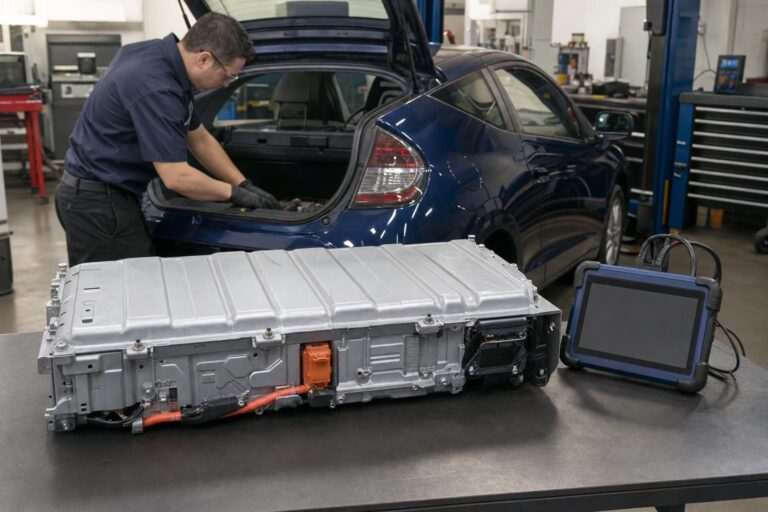
Hybrid battery replacement is the process of removing a worn or failed traction battery pack from a hybrid vehicle and fitting a functional replacement. For most mainstream hybrids, a 2026 cost guide puts the total job somewhere between roughly $2,000 and $8,000, with common models often landing around $2,000–$4,000 depending on the vehicle and, above all, the source of the replacement pack. For repair shops, fleets, importers and resellers, the source of that pack—brand-new, remanufactured, or reconditioned—is the single biggest driver of both price and long-term risk.
This guide explains what a hybrid battery replacement actually involves, how costs break down by model, what warranty terms to confirm first, and how to compare sourcing options when you buy for a workshop, a fleet, or a distribution business.
Key takeaways
- A 2026 cost guide reports typical hybrid battery replacement totals of about $2,000–$8,000, with mainstream hybrids frequently near $2,000–$4,000, driven mainly by battery source.
- Federal rules require a minimum hybrid battery warranty of 8 years / 100,000 miles; California-aligned states extend that to 10 years / 150,000 miles.
- The three practical sourcing routes are new OEM-spec packs, remanufactured packs, and reconditioned packs—each with different provenance and risk profiles.
- For commercial buyers, cell provenance, testing evidence, and warranty terms matter more than headline price.
- Cross-border buyers must plan for the correct dangerous-goods handling and correct model fitment before purchasing.
What Hybrid Battery Replacement Involves
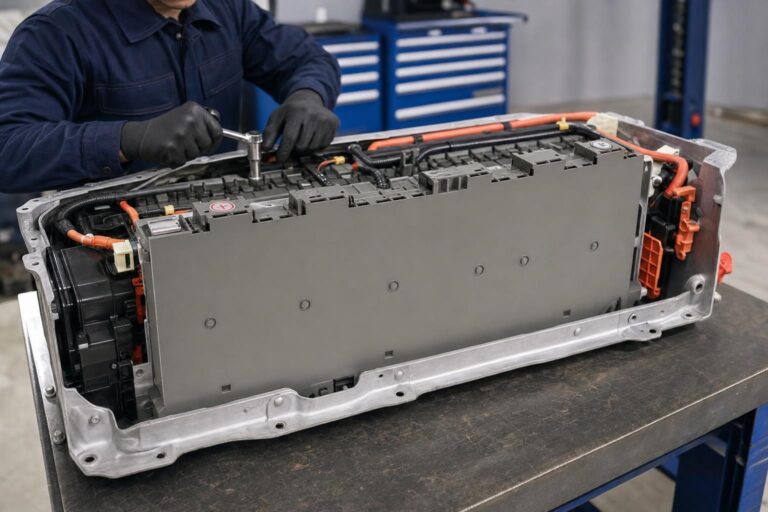
A hybrid traction battery is the high-voltage pack that powers the electric side of a hybrid drivetrain. It is separate from the small 12-volt battery that runs lights and accessories. When people search for hybrid car battery replacement, they almost always mean this high-voltage pack—typically a nickel-metal hydride (NiMH) or lithium-ion (Li-ion) assembly of many cells or modules, a supporting frame, bus bars, sensors, and often a battery-management or control unit.
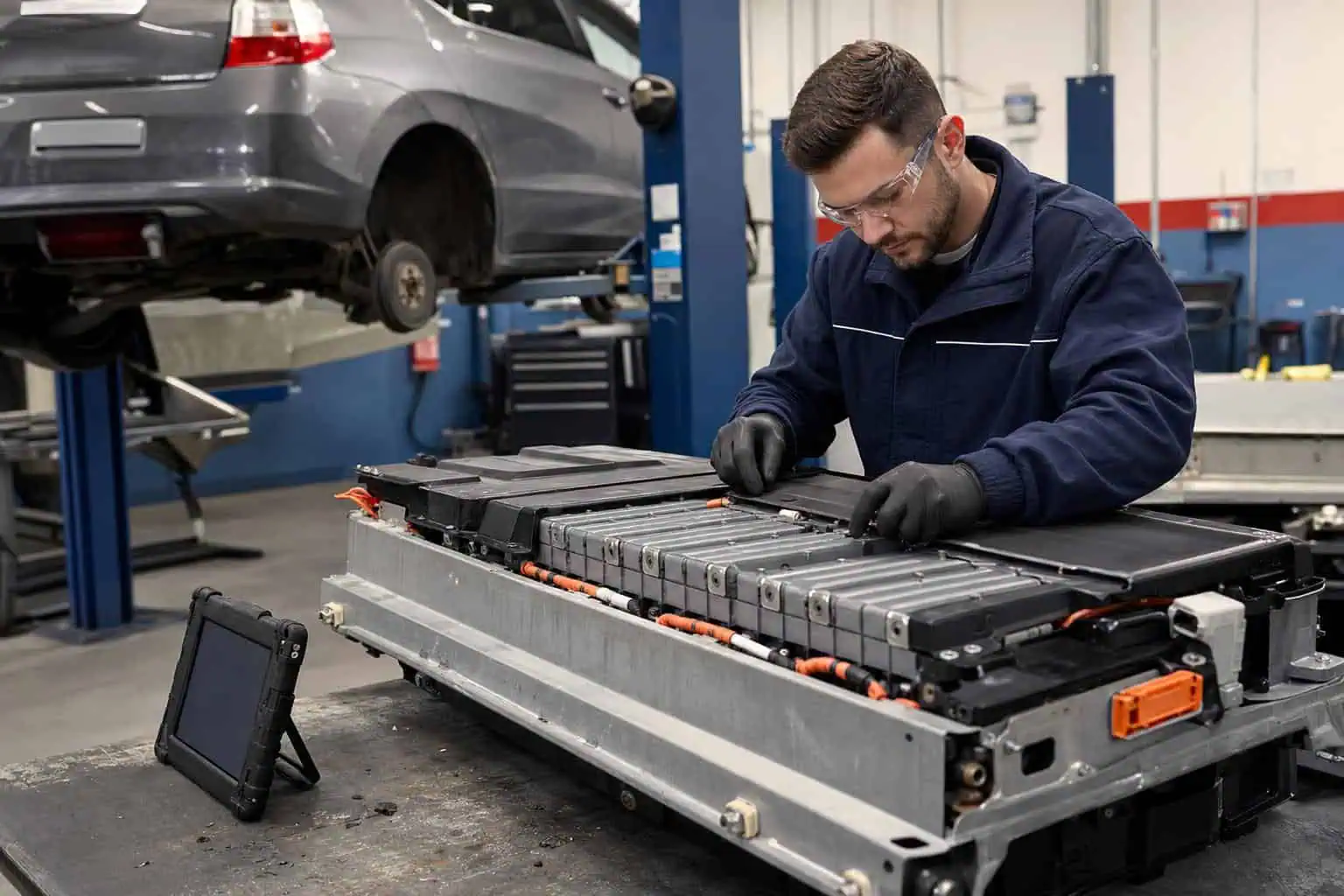
Replacement generally means removing the old pack, transferring or renewing any reusable hardware, fitting the replacement assembly, reconnecting the high-voltage and low-voltage connections, and clearing stored fault codes so the vehicle re-learns the new pack. Because these systems operate at dangerous voltages, the physical work belongs with trained technicians using proper insulated tools and lockout procedures. This article is a buyer and sourcing guide, not a DIY high-voltage manual.
Signs a hybrid battery pack needs replacement
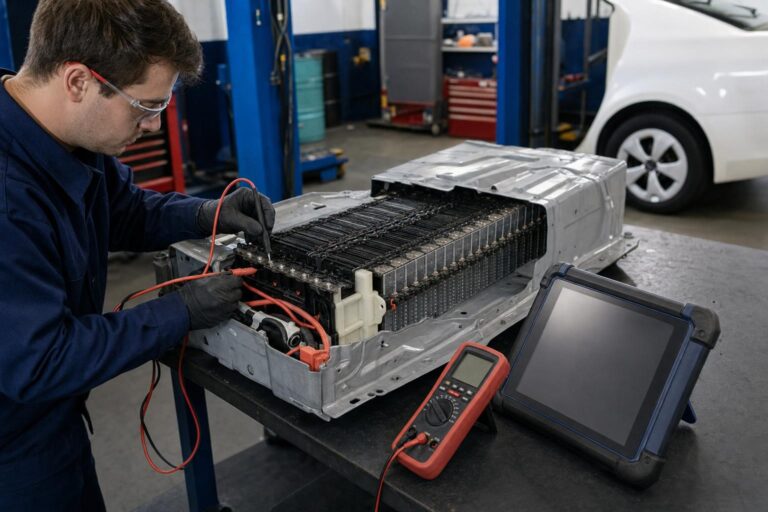
Common indicators that a customer’s pack is failing include a dashboard hybrid-system warning light, a stored diagnostic trouble code such as P0A80 (“Replace Hybrid Battery Pack”), a noticeable drop in fuel economy, erratic state-of-charge behaviour where the gauge swings up and down quickly, reduced electric-only assist, and cooling fans running harder than usual. A single weak module can drag down an otherwise healthy pack, which is why diagnosis before quoting a replacement is essential.
How replacement differs by chemistry and platform
Most older mass-market hybrids—early-to-mid Prius generations, Camry Hybrid, Civic Hybrid, Insight, Ford Fusion Hybrid and Ford Escape Hybrid—use NiMH packs, which are robust and well understood. Some later or performance-oriented hybrids use Li-ion. The chemistry affects handling, transport rules, and pack construction, so a replacement must match the vehicle’s original specification. Platform matters too: a Toyota Prius pack is not interchangeable with a Honda Insight pack, and even within one nameplate, generations differ. Always confirm fitment against the specific vehicle before ordering.
2026 Hybrid Battery Replacement Cost Overview
Cost is the first question most buyers ask, and the honest answer is that it depends heavily on battery source and vehicle. Published 2026 guidance places the typical replacement in a broad band. As a benchmark, one 2026 cost guide reports totals of roughly $2,000 to $8,000, clustering around $2,000–$4,000 for mainstream hybrids. Treat these as third-party market figures for context, not as any single supplier’s pricing.
Cost ranges by battery source
The three practical routes each carry a different cost and risk profile:
| Source | What it means | Typical positioning | Main risk for buyers |
|---|---|---|---|
| New OEM-spec pack | A brand-new pack built to meet the original manufacturer’s specification, with new cells throughout | Usually the highest upfront cost; lowest variability | Verifying genuine new-cell provenance and correct fitment |
| Remanufactured pack | A pack rebuilt using new and tested components, sold with a warranty | Mid-range; often below dealer OEM pricing | Component mix and consistency vary by supplier |
| Reconditioned pack | An existing pack with weak modules replaced or rebalanced | Lowest upfront cost | Remaining life is uncertain; cores are aged |
Third-party industry commentary observes that the refurbished and remanufactured market has matured, with independent specialists offering tested packs, often with one-to-three-year warranties. That maturity is real, but for commercial buyers the trade-off is clear: lower price generally means older underlying cells and more variability, while a brand-new OEM-spec pack removes the uncertainty of an aged core.
Model-specific cost considerations
The core replacement process is similar across platforms, but a few model notes help set expectations:
- Toyota Prius (2005–2013 and beyond): The Prius spans multiple generations (NHW20 vs. ZVW30, for example), so confirm the exact model year and pack type—whether the vehicle is a 2005, 2007, 2008, 2010 or 2013 Prius. Large NiMH-equipped populations mean these packs are frequent replacement candidates as vehicles age.
- Toyota Corolla Hybrid: A newer platform that is also a common replacement candidate as vehicles age.
- Toyota Camry Hybrid: Earlier NiMH-equipped model years, such as the 2007 Camry Hybrid, are common replacement candidates; confirm generation-specific fitment before quoting.
- Toyota Aqua / Prius C: Popular in many import markets; fitment differs from the standard Prius, so verify the specific variant.
- Honda Civic Hybrid and Insight: Honda’s IMA-based packs have their own construction and control logic; a 2006 Honda Civic Hybrid pack is not a Toyota substitute.
- Ford Fusion Hybrid and Ford Escape Hybrid: Ford’s hybrid packs follow their own fitment and mounting, and these platforms are also common replacement candidates as vehicles age.
Because compatibility is model- and year-specific, always match a pack to the exact vehicle rather than to a nameplate alone. You can review the available hybrid battery product range to see how packs are organised by application.
Warranty Coverage Basics Buyers Should Check First
Before quoting or buying any replacement, confirm whether the vehicle’s original battery is still under warranty. In some cases a failing pack is still covered, which changes the entire decision.
Federal minimum and extended state coverage
In the United States, federal rules require a minimum hybrid battery warranty of 8 years or 100,000 miles, with California and California-aligned states requiring 10 years or 150,000 miles. Coverage details vary by manufacturer: reporting indicates that Toyota and Lexus apply 8 years/100,000 miles on most models, extending to 10 years/150,000 miles in California-emissions states, while Honda applies the 8-year/100,000-mile federal standard across its hybrid lineup.
Confirming remaining coverage before purchasing
For each candidate vehicle, check the in-service date, mileage, and the region’s applicable warranty rules. A pack that fails within these windows may be a manufacturer responsibility rather than a paid replacement. This matters especially for fleets, where a batch of vehicles may still fall inside coverage. When coverage has lapsed, the decision moves to sourcing—and that is where source and provenance dominate.
Choosing a Replacement Battery: New OEM-Spec vs. Remanufactured vs. Reconditioned
The right choice depends on how long the vehicle needs to stay in service and how much downtime risk the buyer can accept.
Why source and provenance matter for shops and fleets
A reconditioned pack built on an aged core may be economical today, but its remaining life is inherently uncertain because the underlying cells have already spent years in service. For a customer keeping a car another year, that can be acceptable. For a fleet operator standardising on a platform, or a workshop that wants to minimise comeback jobs, the variability of aged cores is a real operational cost. A brand-new pack built to OEM specifications, with new cells throughout, removes that uncertainty—which is why many commercial buyers weigh it against cheaper options despite the higher upfront figure.
OKACC supplies new OEM-spec NiMH hybrid battery replacement packs—brand-new units designed to meet original manufacturer specifications, not refurbished or reconditioned cores. Buyers who need documented, repeatable quality can review the OKACC quality assurance approach when comparing suppliers.
Questions to ask any supplier before purchasing
- Are the cells brand-new, or is this built on a used core? This is the most important question and determines whether you are buying new, remanufactured, or reconditioned.
- What testing is performed, and can you see the results? Ask about capacity, internal resistance, and module balancing checks.
- What is the warranty term and what does it actually cover? Confirm duration, labour, and the claims process.
- Which exact model-years does this pack fit? Insist on fitment confirmation, not just a nameplate match.
- How is the pack packaged and shipped? High-voltage packs are regulated dangerous goods.
Sourcing Replacement Hybrid Batteries for International Buyers
For importers, distributors and cross-border workshops, procurement is about more than the pack itself.
What to verify when importing or distributing packs
- Correct fitment data: Match packs to specific VINs or documented model-year ranges before committing to an order.
- Dangerous-goods compliance: NiMH hybrid packs typically ship under UN 3496 (nickel-metal hydride batteries), while lithium-ion hybrid packs ship under different classifications such as UN 3480 or UN 3481—so do not apply UN 3496 to a Li-ion pack. Confirm your freight partner can handle the correct classification, packaging and documentation for the specific chemistry and route.
- Consistent quality documentation: For resale, you need repeatable specifications and test evidence, not one-off cores that vary batch to batch.
- After-sale support: Clarify how warranty claims and technical questions are handled across borders before you buy.
- Total landed cost: Factor duties, freight, and dangerous-goods surcharges into any price comparison, not just the ex-works figure.
If you are scoping a specific platform or volume, you can request a technical quotation with your model and quantity details so fitment can be confirmed against the actual catalogue.
Buyer and Shop Checklist for Hybrid Battery Replacement Projects
- Diagnose first—confirm the pack is the fault, not a weak 12-volt battery, a cooling issue, or a sensor.
- Check remaining manufacturer warranty against in-service date, mileage and regional rules.
- Identify the exact platform, generation and model-year, not just the nameplate.
- Decide the required service life for the vehicle, then choose the source that fits: new, remanufactured or reconditioned.
- For each quote, confirm cell provenance (new vs. core), testing evidence, and warranty scope in writing.
- Plan dangerous-goods handling and packaging for transport and storage, matched to the pack chemistry.
- Keep the old pack handled and recycled per local regulations.
If you have questions about matching a pack to a specific application or planning a recurring supply, you can contact OKACC to discuss requirements.
Frequently asked questions
How much does hybrid battery replacement cost in 2026?
Published 2026 cost guidance reports typical totals of roughly $2,000 to $8,000 depending on the vehicle and battery source, with many mainstream hybrids landing around $2,000–$4,000. These are third-party market figures; actual pricing varies by supplier, model, labour, and region.
Is my hybrid battery still under warranty?
Possibly. Federal rules require a minimum of 8 years or 100,000 miles, and California-aligned states require 10 years or 150,000 miles. Check the vehicle’s in-service date, mileage and your region’s rules before paying for a replacement—the failure may still be covered.
What is the difference between new, remanufactured and reconditioned packs?
A new OEM-spec pack uses brand-new cells throughout. A remanufactured pack rebuilds a unit from new and tested components. A reconditioned pack replaces weak modules in an aged core. Lower price generally means older underlying cells and more variability in remaining life.
Are hybrid battery packs interchangeable between models?
No. Packs differ by make, model and generation. A Toyota Prius pack is not the same as a Honda Insight or Ford Fusion Hybrid pack, and even within one nameplate, model years vary. Always confirm fitment against the exact vehicle before ordering.
Which hybrids are common replacement candidates?
Platforms with large NiMH-equipped populations are frequent replacement candidates as vehicles age, including the Toyota Prius across model years, Camry Hybrid, Corolla Hybrid, Aqua/Prius C, Honda Civic Hybrid and Insight, and Ford Fusion and Escape Hybrid. OKACC focuses on new OEM-spec NiMH packs for these NiMH-based platforms.
What should importers know about shipping hybrid packs?
Hybrid NiMH packs typically ship as regulated dangerous goods under UN 3496, requiring correct classification, packaging and documentation, while lithium-ion hybrid packs ship under different classifications such as UN 3480 or UN 3481. Confirm your freight partner can handle the correct chemistry on your route, and factor dangerous-goods costs into total landed price.
Can I replace a hybrid battery myself?
Hybrid traction batteries operate at dangerous high voltage. Removal and fitting should be done by trained technicians using insulated tools and proper lockout procedures. This guide covers sourcing and buying decisions, not DIY high-voltage installation.