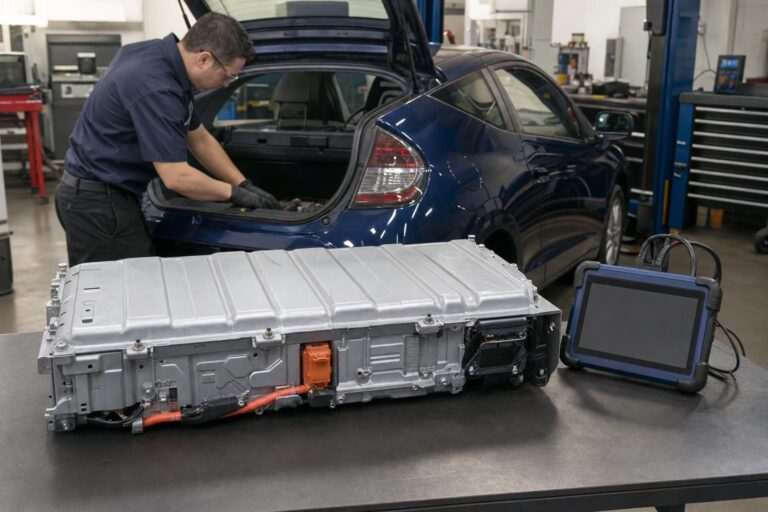
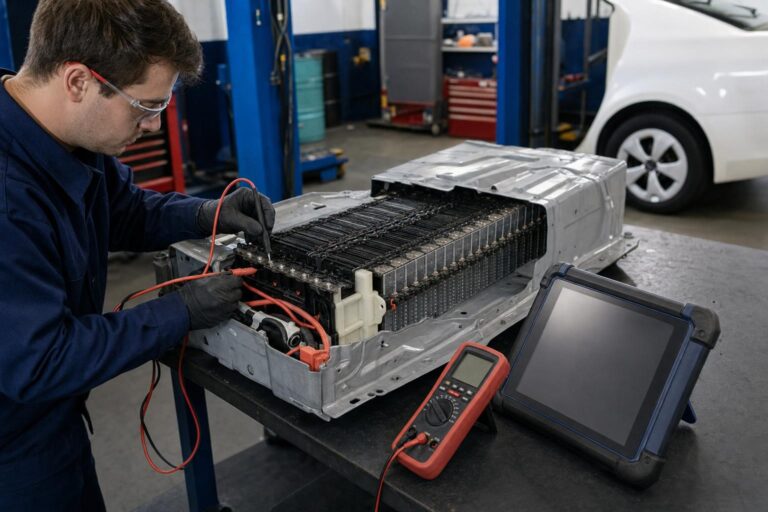
Betrouwbare hybride batterijoplossingen































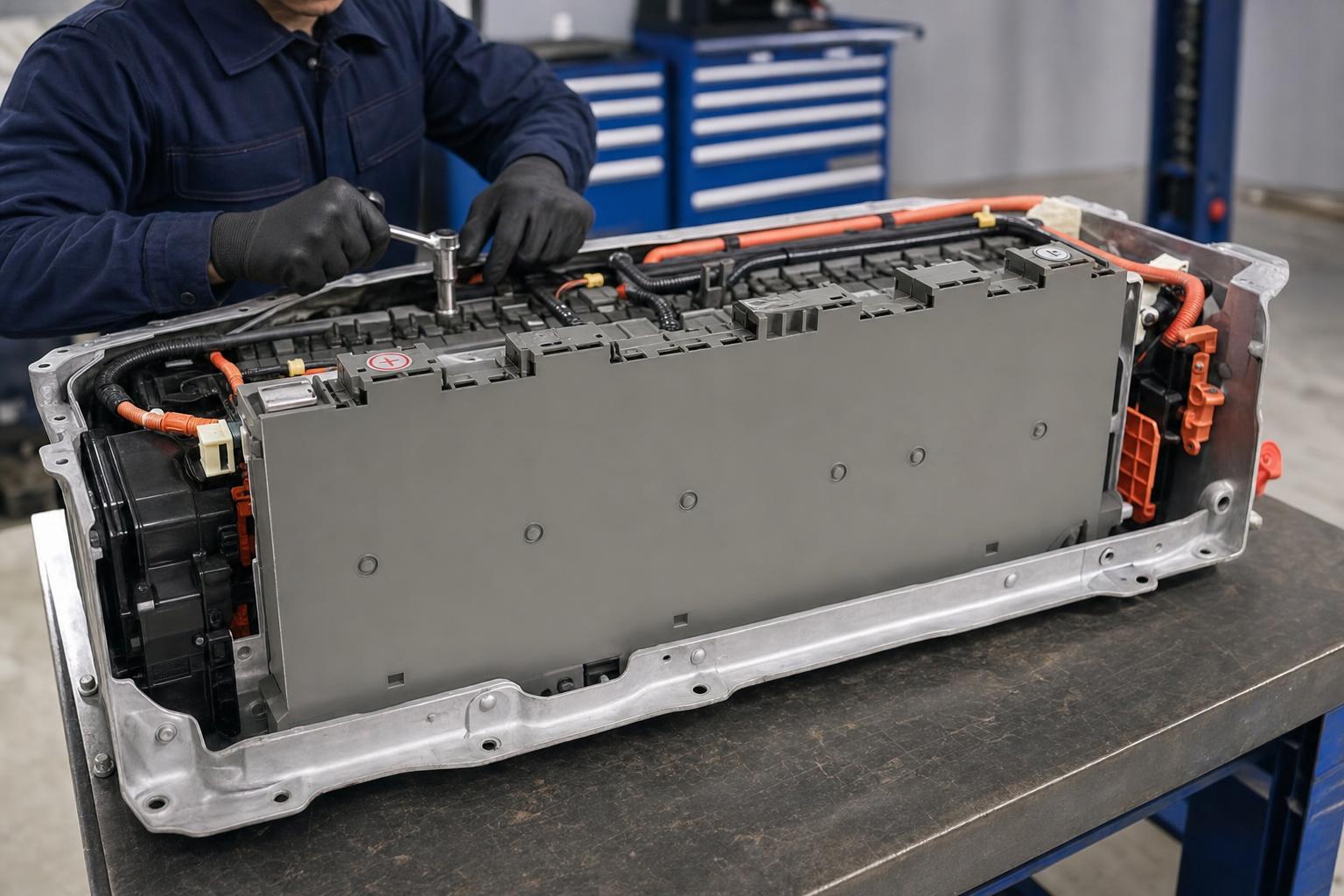
Specificaties van de Toyota Prius Hybrid-accu: spanning en NiMH-architectuur per generatie
Een specificatiegerichte handleiding voor de accuspanning, NiMH-cel- en modulearchitectuur en generatieverschillen van de Toyota Prius hybride accu, waarmee distributeurs en reparatiewerkplaatsen het juiste vervangende hoogspanningspakket kunnen vinden op basis van de compatibiliteit in plaats van op basis van merkclaims.

If you source or fit a Toyota Prius hybride accu, the single most important rule is simple: match the original pack’s voltage, chemistry, module count and physical enclosure, not just the model name. Across the Prius lineup, Toyota has used different high-voltage (HV) architectures, from a 273.6V first-generation pack to the 201.6V design that defined the 2004–2015 cars, and later packs rated at 207.2V or 222V. Getting this wrong leads to fault codes, poor fitment and returns. This guide explains the specifications that matter so international buyers, distributors and repair professionals can identify and cross-reference a replacement NiMH pack correctly.
Belangrijkste conclusies
- The Prius HV (traction) battery is a nickel-metal hydride (NiMH) pack built from series-connected 7.2V modules, each made of six 1.2V prismatic cells.
- The 2004-and-later Prius (Gen 2/3) uses a 201.6V pack of 28 modules (168 cells); the 2001–2003 NHW11 used a higher 273.6V pack of 38 modules (228 cells).
- Later Prius (Gen 4/Gen 5) NiMH documentation describes a nominal HV voltage of either 207.2V or 222V depending on variant.
- Prius v shares the 201.6V, 28-module architecture of its era but uses different module and pack dimensions.
- Always verify voltage, module/cell count, chemistry and physical enclosure against the exact model year, trim and chassis code before ordering.
How Hybrid Synergy Drive uses the HV (traction) battery
The Prius runs on Toyota’s Hybrid Synergy Drive, a power-split hybrid system where a petrol engine and one or more electric motor-generators work together. The high-voltage battery—often called the HV battery, traction battery or hybrid battery pack—stores and supplies the electrical energy the motor-generators use to drive the wheels, assist the engine and recover energy under braking.
Unlike the small 12V auxiliary battery that powers the computers, lights and accessories, the HV battery is a traction battery: it delivers the high voltage needed to move the car. On the Prius this energy is managed by the hybrid control system, and the pack’s DC voltage is boosted by the inverter/converter for the motor-generators. On later Prius models, Toyota technical documentation describes a nominal HV battery voltage of DC 222.0V or DC 207.2V that is boosted up to a maximum of DC 600V for the motor-generator system.
NiMH chemistry basics: cells, modules and pack-level voltage
Most Prius HV batteries are nickel-metal hydride (NiMH). Understanding how the pack is built from the cell up makes cross-referencing far easier.
- Cell: the smallest unit, a prismatic NiMH cell with a nominal voltage of 1.2V.
- Module: six 1.2V cells connected in series, giving a nominal module voltage of 7.2V. A typical module capacity is around 6.5Ah. These prismatic NiMH modules were historically supplied to Toyota by Panasonic, as documented in an independent thermal evaluation of the Prius battery pack.
- Pack: multiple modules wired in series inside a structural enclosure, producing the full pack voltage.
So the arithmetic is predictable: 28 modules × 7.2V ≈ 201.6V, while 38 modules × 7.2V ≈ 273.6V. Each module is a sealed, non-spillable case. Toyota hybrid training material notes that the electrode plates are made of porous nickel and metal hydride alloy, with an alkaline electrolyte (a potassium and sodium hydroxide mixture) absorbed into the cell plates so it does not normally leak even in a collision.
Generation-by-generation voltage and architecture
The headline specification differences follow the Prius generations. Use the chassis code as your anchor, because “Prius” alone is not specific enough for sourcing.
2001–2003 Prius (first generation, NHW11)
The first-generation Prius HV battery used 38 NiMH modules split across two holders, totalling 228 individual 1.2V cells, for a rated pack voltage of 273.6V, as documented in independent Toyota hybrid system training material compiled for technicians. This is notably higher than the pack that followed and is a common source of confusion, so a pre-2004 car should never be cross-referenced against a later 201.6V design.
2004–2015 Prius (Gen 2 NHW20 and Gen 3 ZVW30)
This is the volume era for Prius hybrid battery demand, covering the “Prius 20” and “Prius 30” bodies many buyers search for. The Gen 2/3 HV battery pack consists of 28 NiMH modules connected in series, each rated at 7.2V, for a total pack voltage of approximately 201.6V (168 cells). Each module is a sealed, non-spillable case. Toyota’s own third-generation Prius dismantling document confirms the 28-module, 201.6V series architecture. A battery for a 2013 Prius (Gen 3) shares the same basic 201.6V/28-module NiMH blueprint as the earlier Gen 2 pack, though enclosure details and connectors vary by model year. Buyers sourcing for these common bodies can review the dedicated PRIUS category to match a part to the chassis code in hand.
Later generations (Gen 4/Gen 5) Prius NiMH packs
On later Prius generations, Toyota moved to packs described in technical documentation with a nominal voltage of either DC 207.2V or DC 222.0V, depending on the variant; the 2023 Prius (MXH61), commonly designated the fifth generation, is one example covered in Toyota’s official dismantling documentation. An independent hybrid/EV benchmarking resource notes that the Prius HEV NiMH pack’s nominal voltage rose from 207.2V to 222V while keeping the same cell capacity, which you can review in the Toyota battery benchmark overview. The practical takeaway for buyers: a later Prius is not automatically a 201.6V part, so confirm the exact variant before ordering.
Prius v hybrid battery specifications
The Prius v (the larger wagon-bodied variant) is frequently mis-sourced because buyers assume it uses a unique, higher-capacity pack. In fact, the Prius v HV battery of its era uses the same 201.6V, 28-module NiMH architecture as the standard Prius, confirmed in Toyota’s Prius v dismantling document. The important distinction is physical: the Prius v uses different module and pack dimensions suited to its body. So while the electrical specification (voltage, chemistry, module count) is shared, a Prius v battery and a standard Prius pack are not interchangeable on fitment alone. Always verify the enclosure, mounting points and connector layout.
Physical specifications and enclosure design
Electrical match is necessary but not sufficient. Two packs can share 201.6V and 28 modules yet still differ in:
- Module and pack dimensions — length, width and stack height.
- Enclosure and mounting — bracketry, cooling duct interfaces and how the pack sits in the body (behind or under the rear seat area).
- Connector and bus bar layout — orientation and terminal positions.
- Cooling — the NiMH pack is air-cooled, so duct and fan interfaces must align.
- Gewicht — relevant for freight, handling and dangerous-goods documentation.
Because NiMH traction batteries may be subject to dangerous-goods regulations depending on transport mode and jurisdiction, physical and labelling details also affect cross-border logistics, not just fitment. Distributors should capture full dimensions and weight before committing to a shipment.
NiMH versus Li-ion across the Prius lineup
Not every Prius variant uses the same chemistry. The mainstream HEV Prius models covered above are nickel-metal hydride (NiMH), a proven chemistry prized for durability and thermal stability. Some Prius variants and plug-in versions used lithium-ion (Li-ion) packs instead. The two chemistries are not interchangeable: they differ in cell voltage, management electronics and physical format. When a buyer asks about the “Prius battery type”, the correct answer always depends on the specific model year, trim and chassis code. Confirm NiMH versus Li-ion before you quote or ship anything, and cross-reference the full Productassortiment hybride accu's against the exact build you are sourcing for.
Signs of degradation and why specifications matter for diagnostics
A degrading NiMH Prius pack typically shows reduced usable capacity, a state-of-charge gauge that swings quickly between high and low, more frequent engine running, noticeably worse fuel economy, and eventually a hybrid system warning light with a stored fault code. These symptoms usually point to cell or module imbalance—where weaker modules drag down the whole series string.
This is exactly why the specification details above matter for service work. Diagnosing a pack requires knowing the expected per-module voltage (7.2V nominal), the number of modules in the string, and the correct total pack voltage for that generation. A technician comparing measured module voltages against the 7.2V benchmark can localise weak modules, but only if they know the architecture they are working with. High-voltage work must always be carried out by trained personnel: the service plug (service grip) must be removed and the system allowed to de-energise, and insulated gloves and appropriate PPE used, following Toyota’s dismantling-manual shutdown procedures. Consistent, documented testing is central to our OKACC kwaliteitsborging process, which records how packs are verified before dispatch.
Sourcing checklist: what B2B buyers should verify
Before issuing a purchase order for a replacement Prius hybrid battery, verify every line below against the exact vehicle:
- VIN / chassis code — NHW11, NHW20, ZVW30, Prius v (ZVW40/41) or later ZVW5x, rather than model name alone.
- Pack voltage — 273.6V, 201.6V, 207.2V or 222V as appropriate to the generation and variant.
- Module and cell count — 28 modules/168 cells for Gen 2/3; 38 modules/228 cells for NHW11.
- Scheikunde — NiMH versus Li-ion, confirmed for that specific build. Note that some later ZVW5x variants retained a 201.6V NiMH pack while others used Li-ion, so variant-level verification is essential.
- Physical fitment — module and pack dimensions, enclosure, mounting and connectors (critical for Prius v).
- Cooling interface — air duct and fan compatibility.
- Logistics — weight and dangerous-goods documentation for export.
OKACC levert Nieuwe NiMH hybride accu volgens OEM-specificaties ter vervanging packs—brand-new, never refurbished or reconditioned—designed to meet original electrical and fitment specifications for applicable Prius models. For application-specific confirmation, Vraag een technische offerte aan with the VIN and chassis code to hand.
Veelgestelde vragen
What is the voltage of a Toyota Prius hybrid battery?
It depends on the generation. The 2004–2015 Prius (Gen 2/3) uses a nominal 201.6V NiMH pack. The 2001–2003 NHW11 used 273.6V. Later Prius (Gen 4/Gen 5) NiMH documentation describes either 207.2V or 222V, depending on the variant.
How many cells and modules are in a Prius battery pack?
The Gen 2/3 Prius pack has 28 modules of 7.2V each, built from 168 prismatic 1.2V cells in total. The first-generation NHW11 pack used 38 modules and 228 cells.
What battery type does the Prius use, NiMH or Li-ion?
Mainstream HEV Prius models covered here use nickel-metal hydride (NiMH). Some plug-in and later variants used lithium-ion. The correct chemistry always depends on the specific model year, trim and chassis code, so confirm before sourcing.
Is the Prius v battery the same as a standard Prius battery?
Electrically, the Prius v of its era shares the 201.6V, 28-module NiMH architecture. Physically it differs: Toyota used different module and pack dimensions for the Prius v body, so the packs are not interchangeable on fitment alone.
What voltage should each Prius battery module read?
Each NiMH module is nominally 7.2V, made from six 1.2V cells in series. Technicians compare measured module voltages against this benchmark to identify weak modules, but high-voltage testing must only be done by trained personnel using the correct shutdown procedure and insulated PPE.
Does a 2013 Prius use the same battery as a gen 2 Prius?
Both the gen 2 (NHW20) and gen 3 (ZVW30, which covers 2013 cars) share the 201.6V, 28-module NiMH blueprint, but enclosure, connector and model-year details differ. Verify by chassis code and physical fitment, not year alone.
How do I confirm the right replacement pack for my vehicle?
Match voltage, module and cell count, chemistry and physical enclosure against the exact VIN and chassis code to select the correct New OEM-spec replacement pack. If you are unsure, neem contact op met OKACC with the vehicle details for application confirmation.
Conclusion: match OEM-spec voltage and architecture
Selecting the correct Prius hybrid battery is a specification exercise, not a branding one. The decisive factors are pack voltage, NiMH module and cell count, chemistry and physical fitment—all of which change by generation and, in some cases, by variant. A 201.6V Gen 2/3 pack, a 273.6V NHW11 pack and a later 207.2V/222V pack are different animals, and a Prius v shares electrical specs but not dimensions with the standard car. Verify each line against the exact chassis code, and your replacement NiMH packs will fit, communicate and perform as the hybrid system expects.