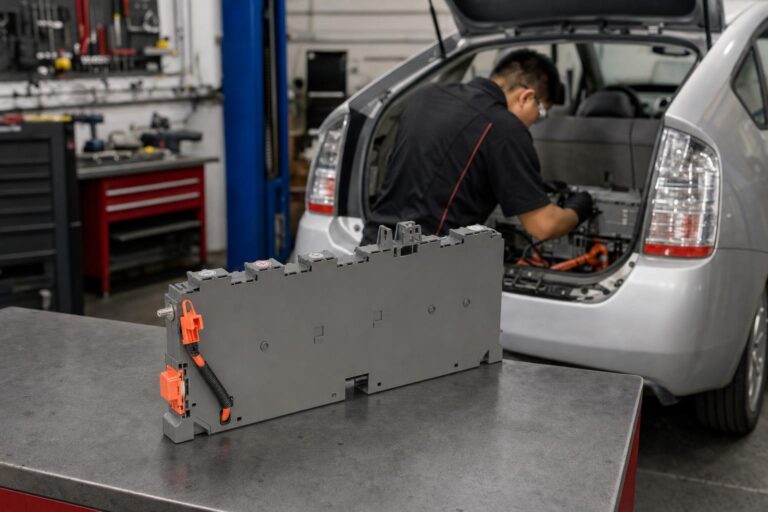
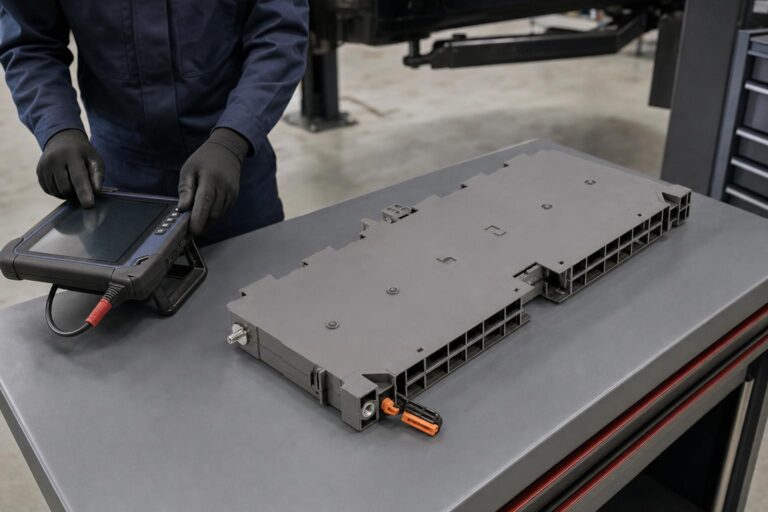
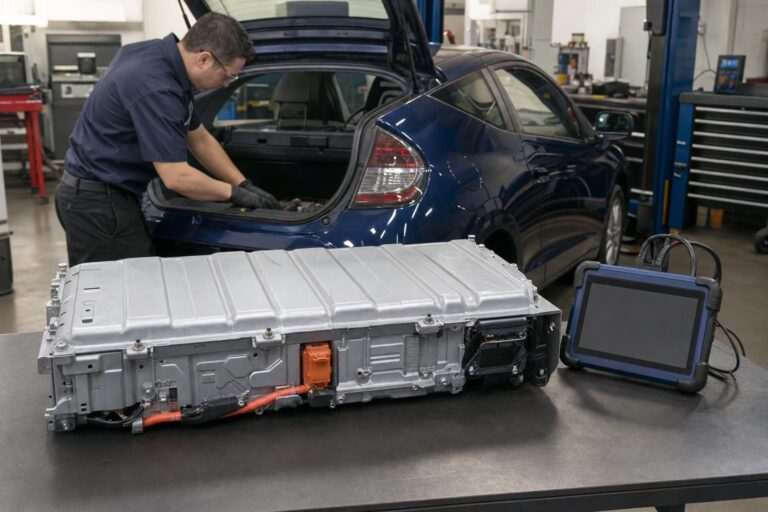
Trusted Hybrid Battery Solutions































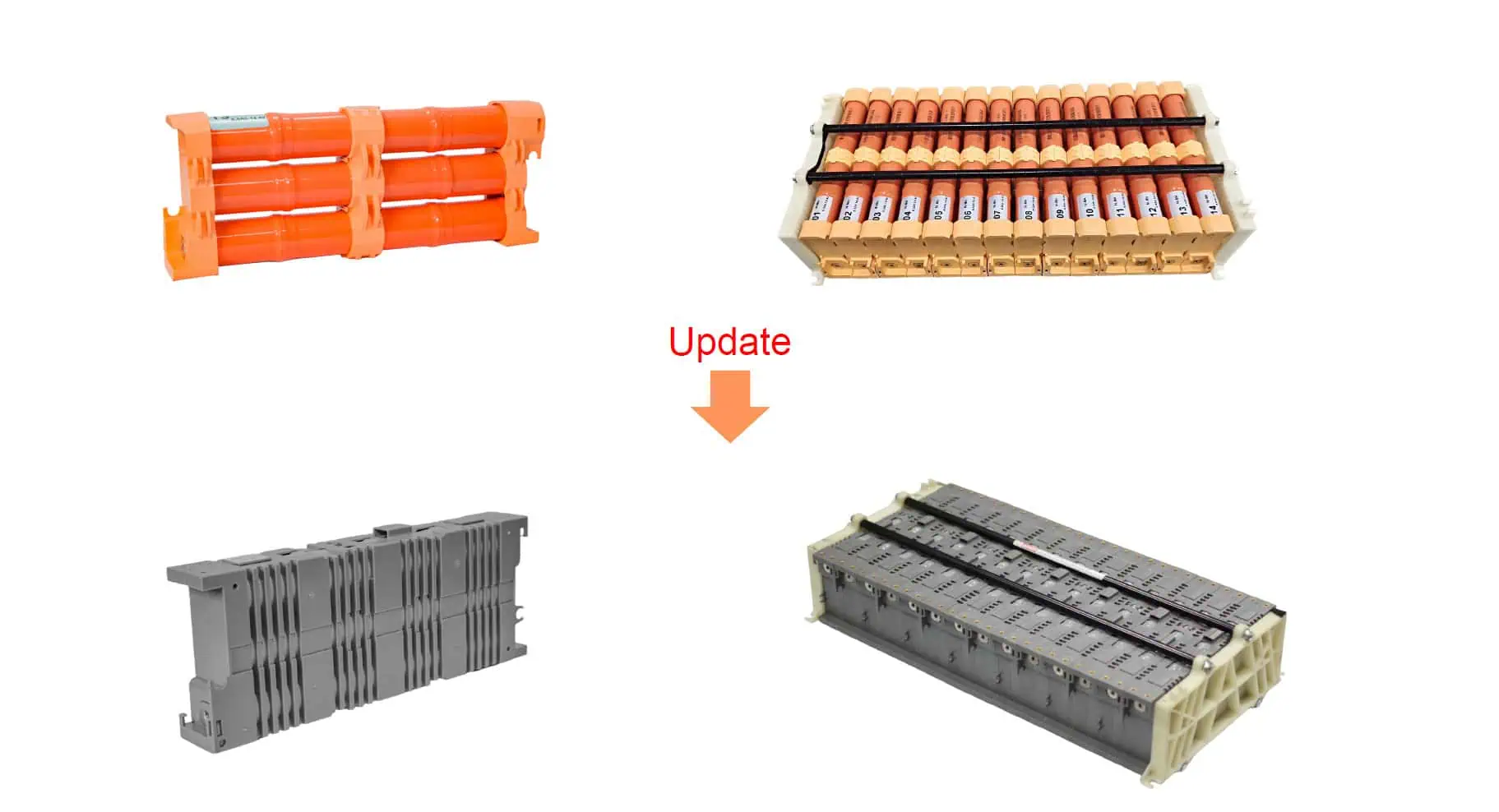
Unleashing the Next-Generation 14.4 V NiMH Module for Toyota & Lexus Hybrids

Hybrid-vehicle owners expect quiet efficiency, long range, and rock-solid dependability. When the original battery finally fatigues, those expectations become even higher—you want a replacement that restores factory-fresh performance and future-proofs your investment. That is precisely what Okacc Hybrid Batteries delivers with its newly engineered 14.4 V upgraded Ni-MH battery module, purpose-built for Toyota and Lexus hybrid models.
Below, you will learn how the upgraded module advances thermal management, slashes installation time, and reaches a safety record that speaks for itself—all while being manufactured by a company that has already shipped three million original-equipment (OE) plate sets worldwide and supplied 50,000 complete aftermarket packs with zero safety incidents.
Why Battery Modules Matter More Than Ever
Hybrid powertrains rely on hundreds of individual Ni-MH cells arranged in carefully balanced modules. Those modules do the heavy lifting—storing and discharging energy whenever you press the accelerator or glide to a stop. A single weak module can significantly reduce the pack’s usable capacity, increase internal temperatures, and trigger fault codes that limit power.
That is why savvy fleet managers and DIY owners alike seek a module engineered for:
- Thermal Stability – heat is the enemy of cycle life
- Precision Fit – reduces shop time and eliminates guesswork
- Certified Safety – proves the chemistry can survive vibration, shock, and the occasional hard pothole
Okacc’s 14.4 V upgrade answers every one of those concerns with measurable improvements.
Key Advantage 1: 30 % Better Thermal Control = Longer Driving Range
Okacc reimagined the internal airflow channeling of each 14.4V module. By optimizing the air-duct geometry, the company achieved faster, more even heat dissipation across every cell. Third-party thermal-camera tests confirm a 30% reduction in temperature gradient compared to its first-generation design, allowing the cells to stay within their optimum 20–30 °C window during spirited driving or hot-weather idling.
What That Means on the Road
- Higher usable capacity per charge—cooler cells suffer less resistive loss, so more watt-hours reach the traction motor.
- Slower capacity fade—for Ni-MH chemistry, every 10 °C drop in operating temperature roughly doubles cycle life.
- Reduced fan noise—because the pack remains cooler, the onboard cooling blower runs at lower duty cycles.
For taxi operators and ride-share drivers who log 250–300 km per day, that translates into real fuel savings, fewer forced-regen cycles, and more years before the next battery replacement.
Key Advantage 2: One-Piece Form Factor = 40 % Faster Installation
Model-specific plastic end pieces cap traditional Toyota modules. Misordering a right-hand versus left-hand end piece can halt a repair bay and wreak havoc on inventory. The upgraded Okacc module eliminates those legacy constraints by adopting a unified shape that drops into any second, third-, or fourth-generation Toyota Prius and their Lexus counterparts.
Benefits for Technicians and Dealerships
- Universal Compatibility – Prius, Prius C, Yaris Hybrid, Corolla Hybrid, Camry Hybrid, Auris, C-HR, and Lexus models, such as the CT200h, ES300h, IS300h, NX300h, and GS450h, all share the same 14.4 V block design.
- No Serial-Number Sorting – Modules can be stacked in any order when assembling a 201 V or 288 V pack, saving time on meticulous labeling.
- Lower Labor Cost – Service centers report shaving 20–40 minutes per battery swap, which is critical when throughput determines profit on busy bays.
Whether you run an independent garage or a regional fleet workshop, that universal form factor frees you from stocking half a dozen SKUs.
Key Advantage 3: Proven Safety—Zero Incidents in 3.05 Million Installations
Safety is where engineering rhetoric meets reality. Okacc’s 14.4 V module inherits a field record that is the envy of the battery industry:
- 3 million OE plate sets in brand-new hybrid vehicles
- 50,000 aftermarket packs installed globally
- 0 reported thermal-runaway or fire events
Third-Party Certifications
- GB 38031 – China’s mandatory safety standard for electric road-vehicle traction batteries.
- UN ECE R100 (Rev. 3) – The globally recognized regulation for electric-vehicle battery vibration, shock, and crash integrity.
Passing both tests confirms the module’s ability to withstand 70 Hz vibration, sudden 28 g crash pulses, and temperature cycling between –40 °C and 60 °C without electrolyte leakage or cell deformation.
Technical Specifications at a Glance
| Parameter | Value | Why It Matters |
| Nominal Voltage | 14.4 V | Direct, drop-in replacement for OEM Toyota & Lexus modules |
| Capacity | 6.5 Ah | Matches or exceeds factory-fresh spec, ensuring complete ECU compatibility |
| Energy | 93.6 Wh | Provides robust power for uphill climbs and highway merges |
| Weight | 2.375 kg (5.24 lb) | Lightweight, improving overall vehicle curb weight |
| Operating Temp. | –40 °C – 60 °C | Handles Canadian winters and Australian summers alike |
| Configuration | Unified geometry | Eliminates left/right end caps for mistake-free assembly |
Supported Vehicle Platforms
Okacc’s 14.4 V module is validated across the Toyota–Lexus hybrid family:
- Toyota: 2nd/3rd/4th-gen Prius, Prius C (Aqua), Yaris Hybrid, Corolla Hybrid, Camry Hybrid (6th & 7th-gen), Auris Hybrid (1st & 2nd-gen), C-HR Hybrid.
- Lexus: CT200h, ES300h, IS300h, NX300h, GS450h.
Because every module shares identical exterior dimensions and busbar spacing, you can mix the new blocks with OE units during phased refurbishment or upgrade an entire pack in one go.
Inside Okacc’s Manufacturing Prowess
A battery module’s true quality starts long before it reaches a shipping carton. Okacc operates a vertically integrated supply chain:
- Electrode Production – proprietary rare-earth nickel-metal-hydride alloy pressed and sintered in-house for consistent grain size.
- Laser Welding – Automated robots weld tab connections within a ±0.05 mm tolerance, eliminating resistance spikes that plague budget replacements.
- 100 % End-of-Line Capacity & Impedance Testing – cells are pre-cycled and matched to within 20 mΩ to guarantee pack balance.
- Dynamic Simulation Bench – Each batch endures charge-discharge cycles that model real-world thermostat swings, confirming that the 30% cooler thermal profile holds up under stress.
Okacc backs that process with ISO 9001:2015 quality management and ISO 14001 environmental stewardship—credible stamps that global automakers demand.
Frequently Asked Questions
How long does an Okacc 14.4 V hybrid battery module last?
Every module is rated for 3,000+ deep cycles, equivalent to 240,000–300,000 km of mixed urban driving. Cooler operation and low impedance extend real-world service life beyond typical OE packs.
Does the upgrade require ECU reprogramming?
No. The battery ECU displays factory-correct voltage and thermistor readings, eliminating the need for firmware updates or dealer codes to be flashed.
Will the upgraded 14.4 V module trigger warning lights?
No. Voltage, resistance, and capacitance values are within OEM-specified windows, ensuring seamless BMS integration.
Can I mix OKacc modules with original Toyota modules?
For optimal pack balance, always replace the complete set with matched OKacc units.
Do I need extra cooling ducts?
Existing OEM fans are sufficient because the internal airflow redesign already enhances heat evacuation by 30 %
What warranty does Okacc provide?
Standard coverage is 36 months or 100,000 km, whichever comes first, with extended warranty options for fleet customers.
A Data-Driven Case Study
A Tokyo taxi fleet (137 Gen-3 Prius units) swapped to Okacc 14.4 V modules between April 2023 and March 2024. Fleet telematics report:
- 9.8 % improvement in average km/L compared with aging OE packs
- 70 % reduction in battery over-temperature alarms
- Zero module failures after 17 months and 115,000 km per vehicle
The faster ROI—even after factoring labor—has convinced the operator to standardize on Okacc modules for its remaining 400 hybrid cabs.
How the Upgrade Pays for Itself
| Cost Center | Typical OE Pack | Okacc 14.4 V Module Pack | Savings |
| Parts | $2,800 | $1,950 | $850 |
| Labor (2 h @ $120) | $240 | $144 | $96 |
| Downtime (ride-share loss) | $120 | $72 | $48 |
| Total | $3,160 | $2,166 | $994 |
Multiply those numbers across a fleet, and the financial logic becomes compelling.
Installation Best Practices (Pro Tips)
- Pre-Balance Voltage – although modules ship balanced, measuring resting voltage ensures faster ECU initialization.
- Torque Spec Matters – tighten busbar nuts to 6–7 Nm to avoid thread stripping.
- Replace Pack Fan Filter – clogged filters sabotage your new thermal advantage.
- Clear DTCs – after reassembly, run Techstream or a compatible scan tool to reset POA80 and associated codes.
Follow those steps and your upgraded pack will perform like a showroom-fresh battery on day one.
Conclusion: Future-Proof Your Hybrid with Okacc
The hybrid aftermarket is crowded with quick-fix modules that promise much and deliver little. Okacc Hybrid Batteries stands out by marrying credible scale—3 million OE plate sets and counting—with continuous R&D that tackles the real-world pain points owners and technicians face every day. The new 14.4 V upgraded Ni-MH module delivers:
- 30 % cooler operation for more extended range and life
- Universal fit that slashes install time and inventory complexity
- Zero-incident safety record backed by GB 38031 and ECE R100 certifications
Whether you drive a beloved second-generation Prius or manage a 1,000-unit hybrid fleet, choosing Okacc does more than restore performance—it elevates it.
Ready to bring factory-fresh power back to your hybrid? Contact Okacc Hybrid Batteries today and join the growing community of drivers who refuse to compromise on quality.