Trusted Hybrid Battery Solutions































2010 Toyota Prius Hybrid Battery Price: Reading Quotes From $1,400 to $6,500
A cost-comparison guide to 2010 Toyota Prius hybrid battery pricing across dealer, reman, salvage and new OEM-spec NiMH channels — built for repair shops, fleets and distributors buying outside China.

The 2010 Toyota Prius hybrid battery price ranges from roughly $1,400 to $6,500 depending entirely on where and how you buy. At the top end, a dealer-channel high-voltage battery replacement estimate runs between $6,307 and $6,552 including parts and labor. At the lower end, specialty hybrid retailers advertise reconditioned Gen 3 packs installed for around $1,400. New OEM-spec NiMH replacement packs generally sit in the middle of that spread. This guide breaks down each sourcing channel so repair shops, fleet operators and distributors outside China can budget realistically and avoid overpaying for the wrong cell technology.
Key takeaways
- Dealer/OEM replacement of a 2010 Prius traction battery is the most expensive route, with estimator data showing roughly $6,300–$6,550 all-in.
- Reconditioned and used/salvage packs are cheapest up front but carry the widest reliability and warranty variance.
- New OEM-spec NiMH replacement packs typically fall between reman and dealer pricing while offering brand-new cells throughout.
- The total invoice is not just the pack: labor, diagnostics, core charges and hazardous-goods logistics all move the final figure.
- For fleet and resale buyers, warranty length and cell condition matter more to total cost of ownership than headline price alone.
Why 2010 Prius Hybrid Battery Replacement Costs Vary So Widely
The 2010 Toyota Prius is a third-generation (Gen 3) hatchback that uses a nickel-metal hydride (NiMH) high-voltage traction battery — separate from the small 12V auxiliary battery that powers accessories and the startup logic. When buyers search for a 2010 Toyota Prius hybrid battery, they almost always mean the high-voltage traction pack, which stores energy for electric-assist driving and regenerative braking. This pack is built from series-connected NiMH modules and is the component that triggers the dreaded P0A80 “replace hybrid battery” diagnostic code as it ages.
A critical technical note for cross-shopping: the 2010 US-market Prius uses NiMH chemistry, not lithium-ion. When comparing offers, confirm any replacement is NiMH built to the original pack specification. Mismatched cell technology can create voltage, thermal-management and control-system incompatibilities, so “cheaper” packs of the wrong chemistry are not a safe substitute.
Pricing swings so dramatically because four distinct sourcing channels compete for the same job, each with different parts costs, cell condition and warranty structures. Understanding these channels is the first step to reading any quote intelligently.
Dealer/OEM Toyota Pricing
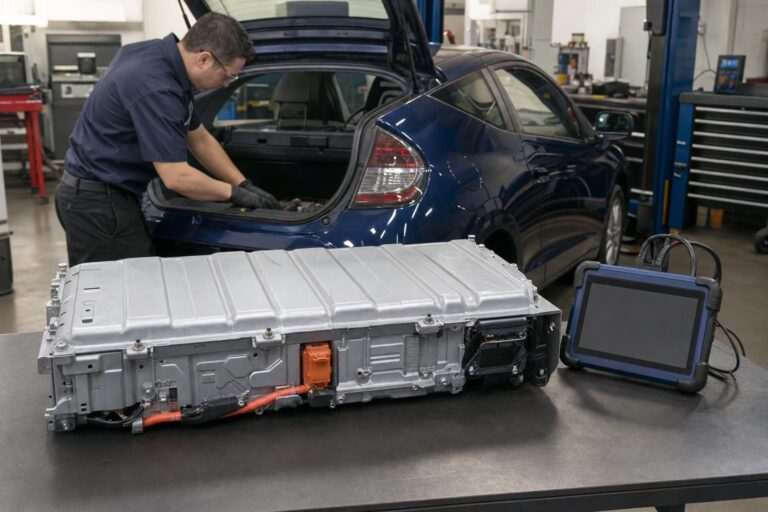
Buying a genuine Toyota traction battery through a franchised dealer is the most expensive path. Independent estimator data lists the average 2010 Prius hybrid high-voltage battery replacement at $6,307 to $6,552, with parts around $5,782 and labor between $525 and $770. An OEM parts retailer separately lists the 2010 Prius Drive Motor Battery Pack (part G9510-47062) at $4,656.81 as a parts-only price, noting the part has been superseded by a current replacement; that figure does not include labor or installation. Dealer pricing buys brand factory backing but rarely makes commercial sense for shops reselling into a price-sensitive used-Prius market.
Remanufactured and Reconditioned Packs
Reconditioned packs reuse an existing battery case and salvage or rebalance its NiMH modules, sometimes swapping the weakest cells. This is the cheapest tier. A reconditioning shop advertises 2010–2015 Prius services with tiered warranties: a 2-year reconditioned tier at $1,100, a 3-year at $1,400 and a 4-year at $1,800 (the same shop separately lists a 5-year new-battery option at $2,900, which is not a reconditioned pack). The trade-off is that reused cells vary in remaining life, and warranty length is the clearest signal of the seller’s confidence in the rebuild.
Used/Salvage Modules
Individual salvage modules pulled from wrecked vehicles are the lowest-cost option per part, and buyers searching for a 2010 Toyota Prius hybrid battery cell replacement are often looking to fix a single failing module rather than the whole pack. This can work as a short-term repair, but a mismatched module frequently accelerates failure of adjacent cells, because the weakest module drags down the entire series string. For fleet and resale operators, salvage modules usually cost more in comebacks than they save up front.
New OEM-Spec NiMH Replacement Batteries
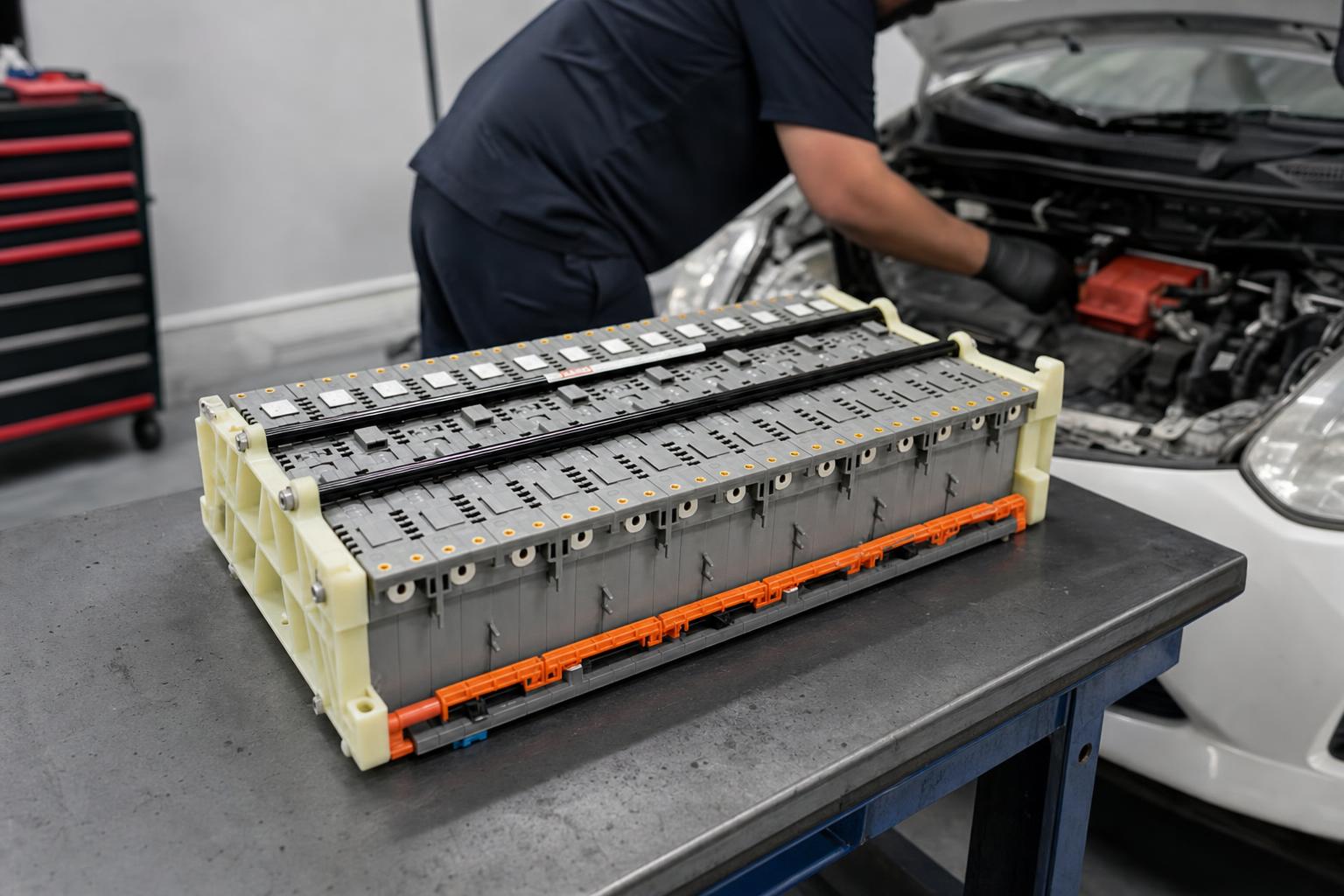
New OEM-spec NiMH packs use brand-new cells throughout and are engineered to meet the original battery’s specifications. Specialty retailers price this category across a wide band. One advertises a new 2010–2015 pack from $1,990 shipped free (uninstalled) with a 4-year/unlimited-mile warranty, contrasted against a stated dealership range of $2,900–$3,900; that $1,990 figure is a ship-only pack price and excludes installation. Another lists a new-generation-cell pack with a 48-month warranty at $2,099. A third advertises a genuine Toyota OEM battery installed by the specialty shop for $3,795 plus tax with a 5-year/100,000-mile transferable warranty — note this is a genuine-Toyota pack fitted by a third-party shop, a distinct category from aftermarket OEM-spec packs. OKACC supplies new OEM-spec NiMH hybrid battery replacements in this brand-new category — designed to meet OEM specifications, never reconditioned or reused.
Typical 2010 Prius Battery Price Ranges by Sourcing Channel
The table below summarizes indicative pricing gathered from the retail and estimator sources cited throughout this article. Pricing is referenced from undated retail listings; confirm with sellers before quoting. Treat these as illustrative reference points, not live quotes — prices, warranties and availability change by seller and region, and none of the figures below represent OKACC pricing.
| Sourcing channel | Indicative price (see notes) | Cell condition | Typical warranty signal |
|---|---|---|---|
| Dealer / genuine Toyota | ~$6,307–$6,552 installed* | Brand-new OEM | Factory-backed service |
| New OEM-spec NiMH | ~$1,990 ship-only** to ~$2,099–$3,795 installed | Brand-new cells | Commonly 4–5 years |
| Remanufactured / reconditioned | ~$1,100–$1,800 installed | Reused/rebalanced modules | Tiered, ~2–4 years |
| Used / salvage module | Lowest per part | Uncertain remaining life | Little to none |
*Estimator installed range including parts and labor; a superseded OEM parts-only listing for part G9510-47062 was $4,656.81 with no labor. **The $1,990 new-pack figure is a shipped-free, uninstalled pack price and excludes installation.
The pattern is consistent: warranty length tracks cell condition. A brand-new NiMH pack with a multi-year transferable warranty gives you a predictable cost per year of service, whereas a cheap salvage module offers no such certainty.
What Drives the Total Invoice: Parts, Labor, Diagnostics and Disposal
The headline pack price is only part of the final invoice. For accurate budgeting, factor in these additional line items:
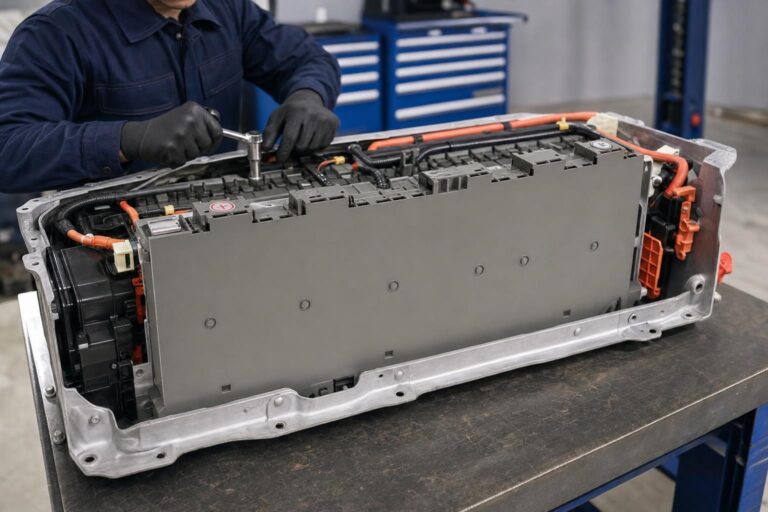
- Labor. Estimator data puts 2010 Prius battery labor at roughly $525–$770. Access is straightforward on Gen 3, but the traction pack operates at a lethal high voltage: replacement is not a DIY job. It requires the high-voltage service (safety) plug to be removed, rated insulated PPE and tools, and a trained hybrid technician following the correct de-energizing procedure.
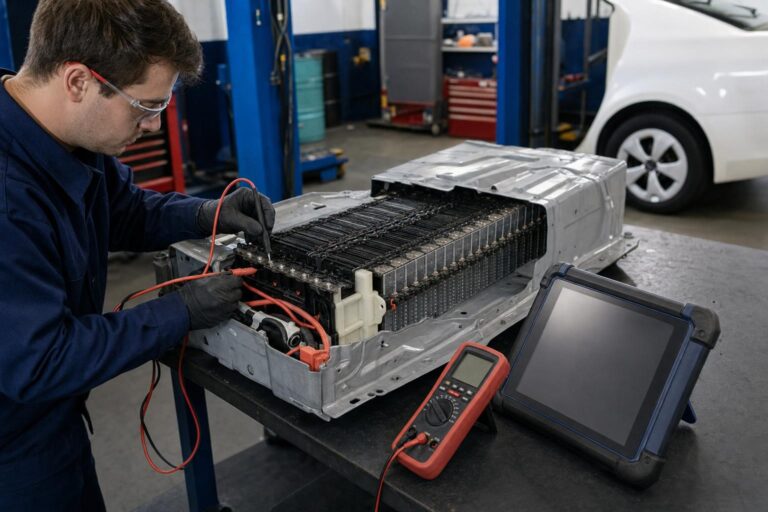
- Diagnostics. Before condemning a pack, a technician should confirm the fault. A P0A80 code, block-voltage imbalance or a battery-fan fault can all present as “dead battery” symptoms, and misdiagnosis wastes an expensive part.
- Core charge. Many suppliers require you to return the old pack (the “core”). An unreturned or damaged core can add hundreds to the effective cost, so confirm the core policy in writing before ordering.
- Disposal and logistics. NiMH traction packs are regulated dangerous goods for transport. Cross-border buyers should budget for compliant packaging, freight and any local recycling or disposal fees.
Signs a 2010 Prius Hybrid Battery Needs Replacement
Recognizing genuine end-of-life symptoms helps you avoid replacing a healthy pack — and helps you diagnose incoming trade-ins accurately. Common indicators include:
- The red triangle warning light with a stored P0A80 hybrid-battery code.
- A rapidly fluctuating state-of-charge gauge that swings between full and empty without matching driving.
- Noticeably worse fuel economy as the engine works harder to compensate for weak electric assist.
- Reduced electric-only running and the combustion engine cycling on and off more often.
- A hybrid cooling fan running loud or constant, often signaling thermal stress in aging modules.
Because these symptoms overlap with other faults, a block-level voltage scan is the reliable confirmation step before purchasing any replacement.
New vs. Used vs. Reman: Trade-offs for Fleet and Resale Buyers
For a private owner keeping a car another year, a cheap reconditioned pack can be defensible. For B2B buyers, the calculation changes. A used-car dealer who installs a salvage module and then faces a warranty comeback three months after the sale erodes both margin and reputation. A rental or fleet operator measuring vehicles by uptime cannot afford a battery that fails intermittently on the road.
This is why many professional buyers gravitate toward brand-new OEM-spec NiMH packs: every cell is new, so remaining life is consistent across the string, and the multi-year warranties typical of this category convert an unpredictable repair into a plannable cost. When you divide price by warranted years of service, a new pack often beats a cheaper reman unit on total cost of ownership. You can review OKACC’s OKACC quality assurance processes to understand how brand-new NiMH replacement packs are tested before they ship.
How B2B Buyers Outside China Can Source a New OEM-Spec NiMH Replacement
OKACC supplies international markets outside China, and sourcing across borders adds variables that domestic buyers rarely think about. A disciplined procurement process should cover the following:
- Confirm fitment by generation. The 2010–2015 Prius shares Gen 3 architecture, but always verify the exact pack configuration against the vehicle before committing to a bulk order.
- Insist on brand-new cell condition in writing. “New” should mean new throughout — not a case with a mix of reused modules. Ask the supplier to state this explicitly.
- Clarify warranty terms and transferability. For resale and fleet buyers, a transferable warranty is a selling point; get the duration and coverage in the quotation.
- Plan dangerous-goods logistics early. NiMH packs ship under hazardous-materials rules; confirm packaging and documentation before the container is booked.
- Buy in volume with a single technical contact. Consolidating orders reduces per-unit freight and gives you one point of accountability.
If you are evaluating a 2010 Toyota Prius hybrid battery for sale in bulk for your market, OKACC serves international distributors, repair shops and fleets with new OEM-spec NiMH replacements. To confirm model coverage, warranty and freight for your region, request a technical quotation with your target vehicle details and order volume.
Frequently asked questions
How much does a 2010 Toyota Prius hybrid battery cost?
It depends on the channel. Dealer replacement estimates run about $6,300–$6,550 all-in, while specialty retailers advertise new OEM-spec NiMH packs from roughly $1,990 shipped (uninstalled) to about $2,099–$3,795 installed, and reconditioned packs from around $1,100 to $1,800. Always compare cell condition and warranty, not just price.
Is a single cell or module replacement a good idea?
A single-module or cell repair is the cheapest short-term fix, but a fresh module paired with aged neighbours often fails again quickly because the weakest module limits the whole series string. For fleet and resale use, a full brand-new pack is usually more economical over time.
What warranty should I expect on a new OEM-spec NiMH pack?
Warranty terms vary by supplier and region. Specialty retailers in the cited sources list warranties from around 4 to 5 years on new-cell packs. Confirm the exact duration, mileage limit and transferability directly with your supplier before ordering.
How long does installation take?
On a Gen 3 Prius the pack is reasonably accessible, and estimator labor figures of roughly $525–$770 reflect a job typically completed within a few hours by a qualified hybrid technician who first pulls the high-voltage service plug and confirms the fault, plus diagnostic time.
What should international buyers know about shipping NiMH packs?
NiMH traction batteries are regulated dangerous goods for transport, so they require compliant packaging, documentation and freight handling. Plan these logistics and any local disposal or recycling fees into your landed-cost budget early in the sourcing process.
Does the 2010 pack fit other Prius years?
The 2010 Prius uses Gen 3 NiMH architecture shared broadly across 2010–2015 models, but exact pack configuration can differ. Always verify fitment against the specific vehicle rather than assuming year-range compatibility.
Are OKACC batteries genuine Toyota parts?
No. OKACC supplies brand-new OEM-spec NiMH hybrid battery replacements designed to meet OEM specifications. They are not genuine Toyota, factory-original or Toyota-approved parts. To confirm coverage for your fleet and request a technical quotation, contact OKACC.
Next Steps for Bulk and Fleet Buyers
The wide 2010 Prius battery price spread is not random — it maps directly onto cell condition, warranty and channel. Dealer packs cost the most and carry factory backing; reconditioned and salvage options are cheapest but least predictable; new OEM-spec NiMH packs sit between them and, for professional buyers focused on uptime and resale confidence, often deliver the best cost per warranted year. Decide which trade-off your business can live with, verify fitment by generation, and lock down warranty and logistics terms before you commit to volume.