Trusted Hybrid Battery Solutions































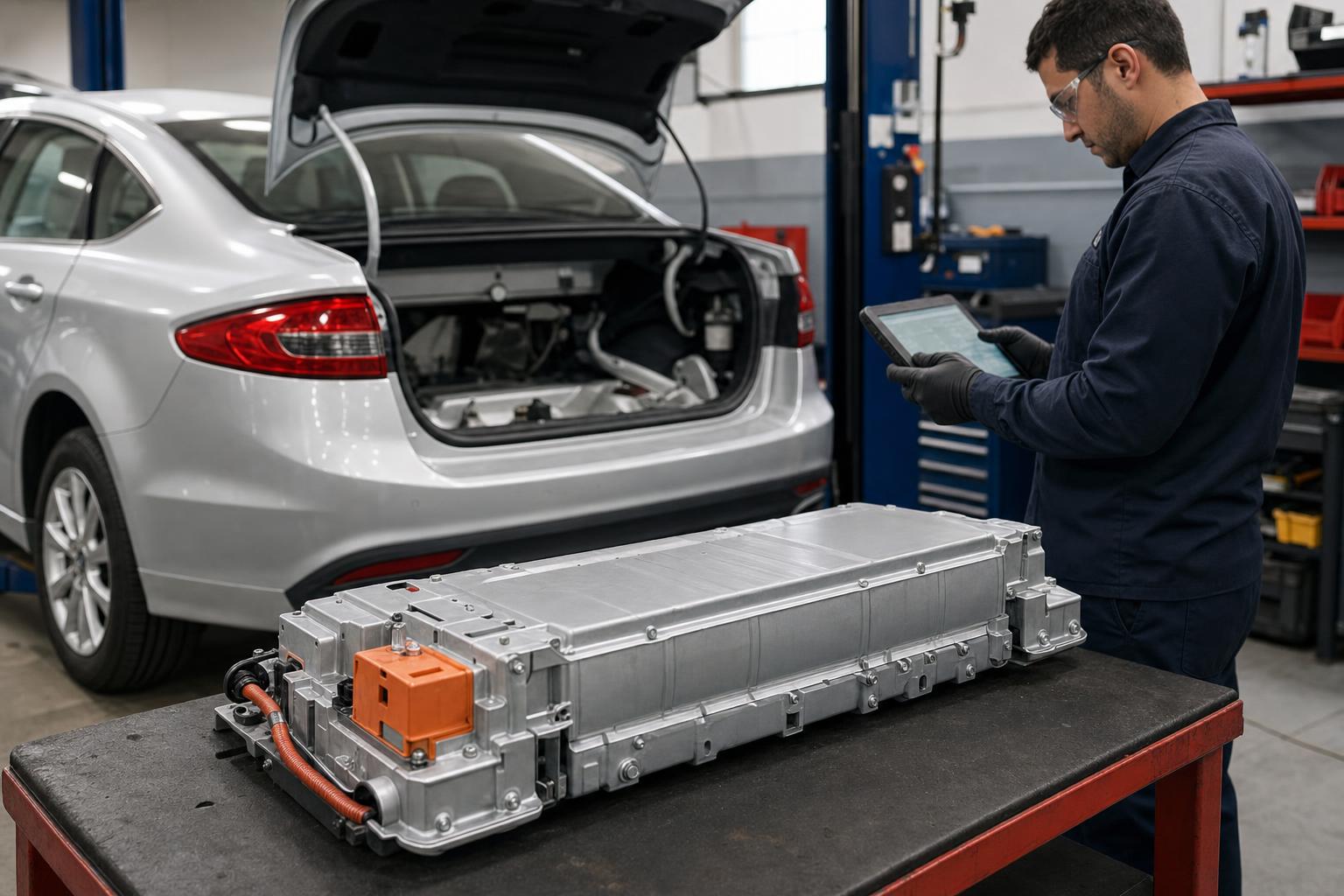
Ford Fusion Hybrid Battery Replacement Cost: Why 2010–2012 NiMH Buyers See Such Wide Quotes
A cost-clarity guide to Ford Fusion Hybrid battery replacement for 2010–2012 NiMH packs: what drives the price, why quotes vary so widely, and how repair shops and resellers can control the total cost with new OEM-spec sourcing.

If you are quoting a Ford Fusion Hybrid battery replacement cost for a customer or sourcing a pack for resale, the honest short answer is this: published estimates span a wide range, roughly $1,250 to $5,350 installed for the earlier Fusion Hybrid, depending on whether the pack is new or remanufactured and how much labor the job requires (costinsider.com). That gap is not random. It reflects real differences in battery chemistry, pack condition, warranty terms and who is doing the work. This guide breaks down what actually moves the price, separates the 2010–2012 NiMH pack from the later Li-ion generation, and shows B2B buyers how to make the cost predictable rather than a surprise on the invoice.
Key takeaways
- Published Ford Fusion Hybrid battery replacement costs vary widely because they mix new packs, remanufactured packs and single-module repairs into one figure.
- The 2010–2012 Fusion Hybrid uses a nickel-metal hydride (NiMH) high-voltage pack; the 2013+ Fusion Hybrid and Energi models moved to lithium-ion, which changes both sourcing and cost.
- Ford’s original hybrid battery warranty is commonly cited as 8 years / 100,000 miles, which most 2010–2012 cars have now exceeded.
- A load test — not just a price quote — should decide whether a full pack or a single module is needed.
- A new OEM-spec NiMH replacement gives repair shops and resellers a cleaner warranty story and more predictable total cost than a mixed-history used pack.
What actually drives Ford Fusion Hybrid battery replacement cost
Before comparing quotes, it helps to understand the levers behind the number. A hybrid battery job is not a single commodity price; it is a combination of the part, the labor and the risk profile of the pack you choose.
- Battery type and condition. A brand-new pack, a remanufactured pack and a single-module repair are three different products at three different prices. Treating them as one “replacement cost” is the main reason quotes look inconsistent.
- Labor hours. On the Fusion Hybrid the high-voltage pack sits in the rear of the vehicle, and de-energizing, removing and reinstalling it is skilled work. One cost guide puts labor alone at roughly $200–$1,200 depending on the shop and region (costinsider.com).
- Dealer vs independent shop. Franchised dealers typically quote higher than independent hybrid specialists, though dealers may offer a longer standard warranty on the part.
- Diagnostics. A shop that load-tests the pack before quoting can tell you whether you need a full replacement or a targeted repair. Skipping that step is how customers get over-quoted.
- Region and availability. Ford hybrid packs have fewer aftermarket remanufacturing specialists than comparable Toyota packs, which can tighten supply and firm up prices in some markets (rohnertparktransmission.com).
Typical cost ranges reported across the market
Because different sources describe different products, their numbers only make sense once you know what each one includes. Here is a synthesis of publicly reported ranges, with the important caveat that these are third-party estimates, not OKACC pricing.
| Scenario (as described by the source) | Reported installed range | Source |
|---|---|---|
| Pack ($1,000–$4,000) plus labor ($200–$1,200) | ~$1,250–$5,350 | costinsider.com |
| General Fusion Hybrid replacement figure | ~$1,500–$3,500 | poweringautos.com |
| Full remanufactured pack, installed | ~$3,800–$5,500 | tucsonhybrids.com |
| Single-module repair on an otherwise healthy pack | ~$1,200–$2,200 | tucsonhybrids.com |
| Non-plug-in Ford hybrids (Fusion / Escape), pack + labor | ~$3,000–$5,500 | kevinsautos.com |
The takeaway for anyone writing a quote: in the cited guides, the low end of these ranges typically reflects a partial repair or a lower-cost used or refurbished unit, while the high end reflects a full remanufactured pack with dealer-grade labor. A customer who is told “$1,500” for one job and “$5,000” for another is often being quoted two genuinely different repairs.
2010–2012 NiMH Fusion Hybrid vs 2013+ Li-ion — why chemistry changes sourcing
This is the single most important distinction for accurate pricing, and it is where a lot of online quotes go wrong.
The first-generation Ford Fusion Hybrid (2010–2012) uses a nickel-metal hydride (NiMH) high-voltage traction battery. NiMH is the same proven chemistry used in most contemporary Toyota and Honda hybrids of that era — robust, well understood, and serviceable at the module level.
The second-generation Fusion Hybrid and the Fusion Energi plug-in (2013 onward) moved to lithium-ion. A different chemistry means a different pack architecture, different diagnostics and a different supply chain. This is why you will see mobile installers list Fusion Li-ion replacement for the 2013–2020 range starting around $2,199–$2,599 including installation and old-battery disposal (hybridbattery911.com) — a third-party Li-ion example that does not apply to a 2010–2012 NiMH car and is not comparable to NiMH pack pricing.
Practical rule: confirm the model year and the pack chemistry by VIN before you quote or order. A NiMH part will not fit a Li-ion car, and vice versa. For the earlier NiMH Fusion Hybrid, OKACC lists a dedicated FUSION hybrid battery category so you can match the correct pack rather than guessing from a generic “Fusion battery” listing.
New vs remanufactured vs refurbished packs — warranty, risk and total cost
Three product categories dominate the aftermarket, and each carries a different risk-to-cost balance. Understanding them lets you explain to a customer why the cheapest quote is not always the lowest total cost.
- New OEM-spec pack. Built to meet the original specification with all-new cells. Highest predictability, cleanest warranty story, lowest risk of an early repeat failure. This is the only category OKACC supplies — OKACC does not sell used, refurbished or remanufactured packs.
- Remanufactured pack. Typically an old pack rebuilt with a mix of new and tested-existing modules. Mid-range price; warranty and lifespan depend heavily on the rebuilder’s grading process.
- Refurbished / used pack. Lowest upfront price, but variable cell age and often the shortest warranty. Sources note that refurbished units can lower the price at the cost of more limited warranty (kevinsautos.com).
For a fleet or a used-car dealer preparing a vehicle for resale, the total cost of ownership matters more than the sticker. A pack that fails again inside a year means a second labor bill and a dissatisfied customer — costs that never appear in the original quote. That is the case for prioritizing a genuinely new pack over the lowest headline price. You can review how OKACC approaches build consistency on its OKACC quality assurance page.
Ford’s original hybrid battery warranty and what it means for an older Fusion Hybrid
Ford’s original hybrid battery coverage is commonly cited as 8 years or 100,000 miles, whichever comes first (poweringautos.com). Coverage terms can vary by market, so buyers should verify the specifics against the vehicle’s original documentation, but this general figure is the one most owners will encounter.
The practical reality: a 2010, 2011 or 2012 Fusion Hybrid is now well beyond that original window on both age and, in most cases, mileage. That means the replacement is almost always an out-of-pocket or aftermarket decision rather than a warranty claim. For B2B buyers, this is exactly why aftermarket sourcing quality and the warranty attached to the replacement pack become the deciding factors — the factory coverage is no longer in play.
Signs the battery — not something else — is the real problem
Never quote a full pack before confirming the pack is actually the fault. Several other issues mimic battery failure, and replacing a healthy pack is an expensive mistake. Typical battery-related indicators include:
- A stored high-voltage battery fault or a wrench / hybrid-system warning on the dash.
- A noticeable drop in fuel economy as the engine works harder to compensate.
- The gasoline engine running more often and the car relying less on electric assist.
- Rapid state-of-charge swings on the energy display.
- Reduced regenerative braking performance.
A specialist should load-test the pack and read module-level data before recommending replacement. As one hybrid repair source stresses, testing — not a price list — is what determines whether a car needs a full pack (~$3,800–$5,500 installed in their example) or a single-module repair (~$1,200–$2,200) (tucsonhybrids.com). Do not attempt DIY work on a high-voltage pack without proper training, insulated tools and correct de-energizing procedure; the traction system carries lethal voltage.
How shops and resellers can control replacement cost for customers
The professionals who quote confidently are the ones who remove surprises from the process. A practical checklist:
- Verify chemistry by VIN first. Confirm NiMH (2010–2012) vs Li-ion (2013+) before pricing anything.
- Diagnose before you quote. Load-test to separate a failing pack from a cooling-fan, sensor or contactor issue.
- Ask about core charges up front. Some suppliers add a refundable or non-refundable core fee that changes the true landed cost.
- Standardize on a known-good source. Reselling a consistent, new OEM-spec pack makes your warranty terms and your labor estimate repeatable across jobs.
- Budget labor honestly. Include de-energizing, R&R and post-install verification in the quote rather than surprising the customer later.
If you are building inventory or comparing options across models, browsing the full hybrid battery product range helps you standardize on packs whose specifications you can quote with confidence.
Why a new OEM-spec NiMH pack is a cost-predictable choice for 2010–2012 Fusion Hybrid
For the first-generation NiMH Fusion Hybrid, a new OEM-spec NiMH hybrid battery replacement — built to meet the original specification with all-new cells — is the option that best controls the variables that make market quotes so unpredictable. The reasons are straightforward:
- Uniform starting condition. All-new cells avoid the mixed cell-age problem that shortens the life of some refurbished and remanufactured packs.
- Cleaner warranty conversation. A new pack lets you present clear, consistent terms to the customer instead of the caveats that come with used inventory.
- Predictable resale outcome. For dealers reconditioning a Fusion Hybrid for sale, a new pack reduces the risk of a warranty return after the vehicle changes hands.
OKACC supplies its Fusion packs as new NiMH hybrid battery replacements designed to meet OEM specifications. Confirm exact model-year fitment against the catalog before ordering, and when you are ready to price a specific job or a stocking order, request a technical quotation with the VIN and target model years so the response matches the actual vehicle.
Frequently asked questions
How much is a 2010 Ford Fusion Hybrid battery replacement?
The 2010 car uses a NiMH pack. Third-party installed estimates for the earlier Fusion Hybrid generally fall within roughly $1,250–$5,350, with the low end reflecting partial repairs or lower-cost units and the high end reflecting a full remanufactured pack with dealer labor. Always confirm chemistry by VIN and diagnose before quoting.
Is the 2011 or 2012 Fusion Hybrid battery different from the 2010?
No — 2010, 2011 and 2012 Fusion Hybrids all use the first-generation NiMH high-voltage pack, so sourcing and cost logic are essentially the same across those three model years. The chemistry change to lithium-ion happens with the 2013 redesign.
Why do online Fusion Hybrid battery quotes vary so much?
Because they describe different products. A single-module repair, a used or refurbished pack, a remanufactured pack and a brand-new pack all carry different prices, and many guides blend them into one “replacement cost” figure without saying which one they mean.
Does Ford’s warranty still cover a 2010–2012 Fusion Hybrid battery?
Usually not. Ford’s original hybrid battery coverage is commonly cited as 8 years or 100,000 miles, and most 2010–2012 cars have exceeded both, making replacement an out-of-pocket or aftermarket decision.
Can I replace a Fusion Hybrid battery myself to save money?
The high-voltage traction pack carries lethal voltage and requires proper training, insulated tools and correct de-energizing procedure. This work should be performed by a qualified hybrid technician; it is not a safe DIY job.
Is a new pack worth more than a cheaper refurbished one?
For many buyers, yes. A new OEM-spec pack starts with uniform new cells and a cleaner warranty story, which lowers the risk of an early repeat failure and a second labor bill — often reducing total cost of ownership even when the upfront price is higher.
How do I get an accurate quote for my inventory or a customer job?
Provide the VIN and target model years so the correct NiMH pack is matched. You can contact OKACC with those details to align fitment and terms before committing to an order.